
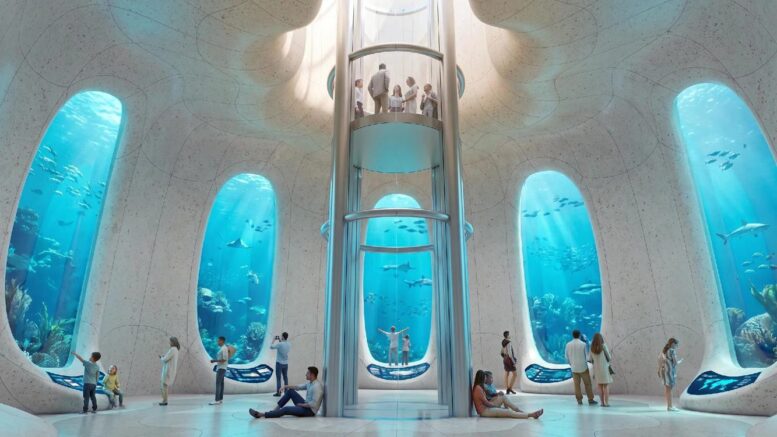
Terra has unveiled its master plan for Living Bayfront at Miami Seaquarium, a proposed redevelopment of the former marine attraction at 4400 Rickenbacker Causeway on Virginia Key in Miami. The proposal calls for an 83,000-square-foot aquarium, a 118,000-square-foot marine research and education center, a public marina, waterfront dining and recreational facilities, and the restoration of two historic structures. The announcement follows the Miami-Dade County Commission’s unanimous approval of a land use amendment on first reading on October 20, 2026, advancing plans for the county-owned waterfront property.
The redevelopment would transform the former Seaquarium into a year-round destination centered on marine education, environmental conservation, and public access to Biscayne Bay. Terra, led by CEO David Martin, was selected through bankruptcy proceedings involving the former Seaquarium operator to pursue the property’s redevelopment. The company has spent the past year developing the proposal through discussions with community organizations, environmental specialists, and local stakeholders.
Credit: Terra
The Seaquarium, which opened in 1955, was among South Florida’s longstanding marine attractions before closing in 2025. The proposed redevelopment would retain the property’s association with marine education while introducing new public spaces and recreational uses along the waterfront. Unlike the former attraction, the proposed aquarium would not house marine mammals.
“Miami Seaquarium represents a once-in-a-generation opportunity to reimagine one of our community’s most iconic waterfront properties and create something that delivers lasting benefits for Miami-Dade County residents, visitors and Biscayne Bay,” said David Martin, CEO of Terra. “Our vision goes far beyond the physical transformation of the property. We want to reconnect the community with Biscayne Bay, restore and protect its natural ecosystems, and create a public destination where conservation, education, culture and recreation come together. This is about building on the Seaquarium’s legacy to create a public asset that will serve future generations.”
Credit: Terra
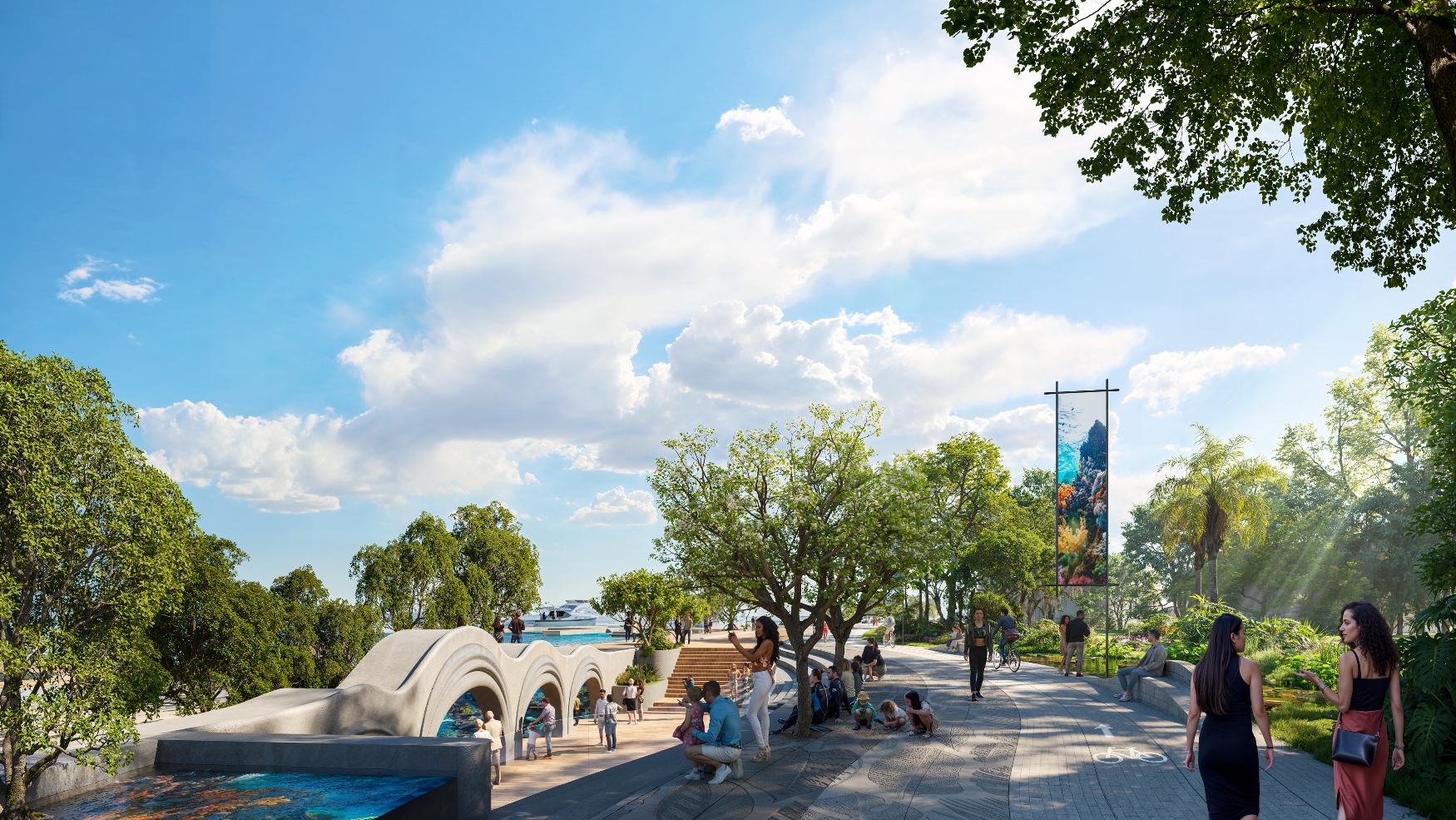
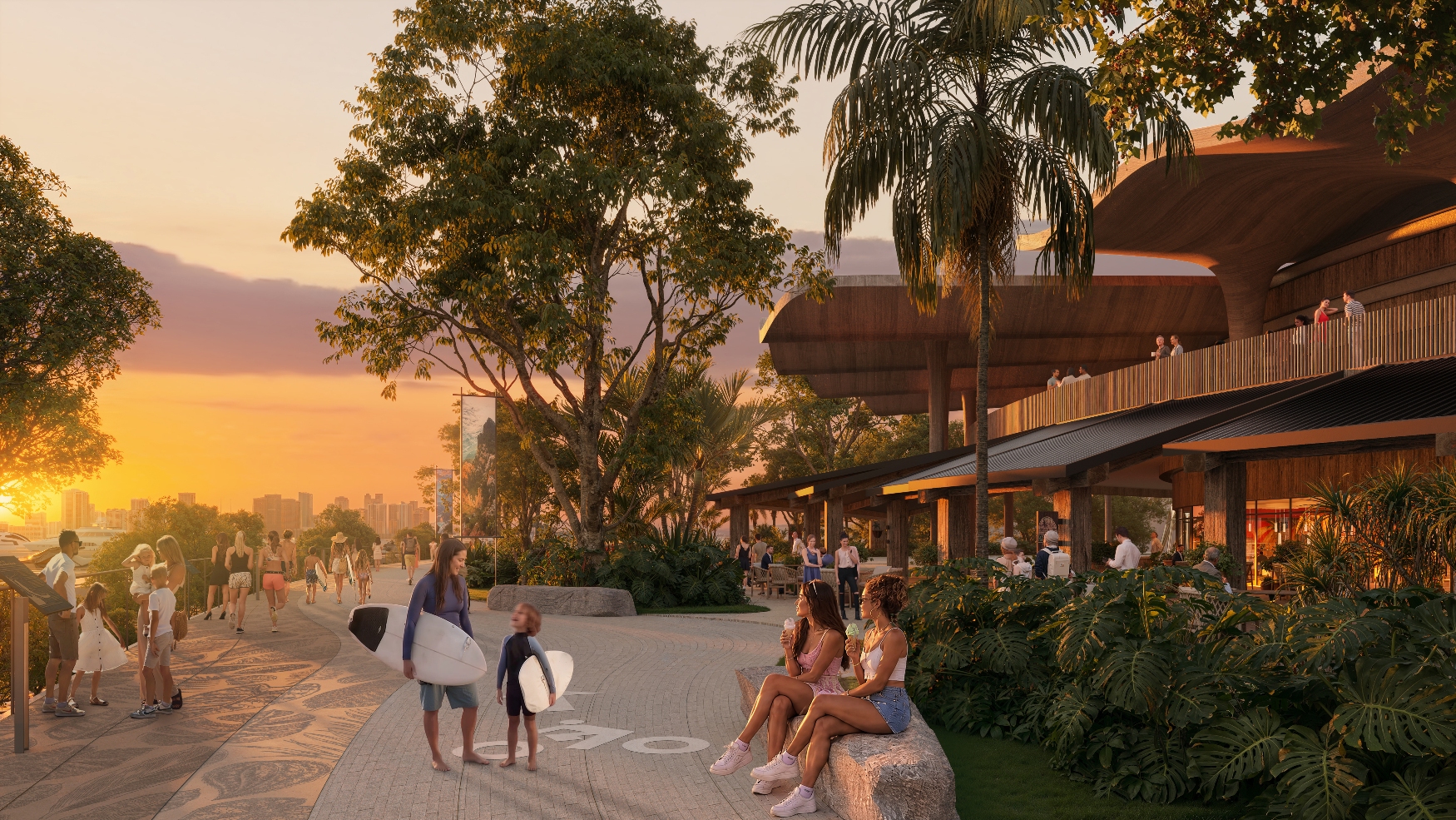
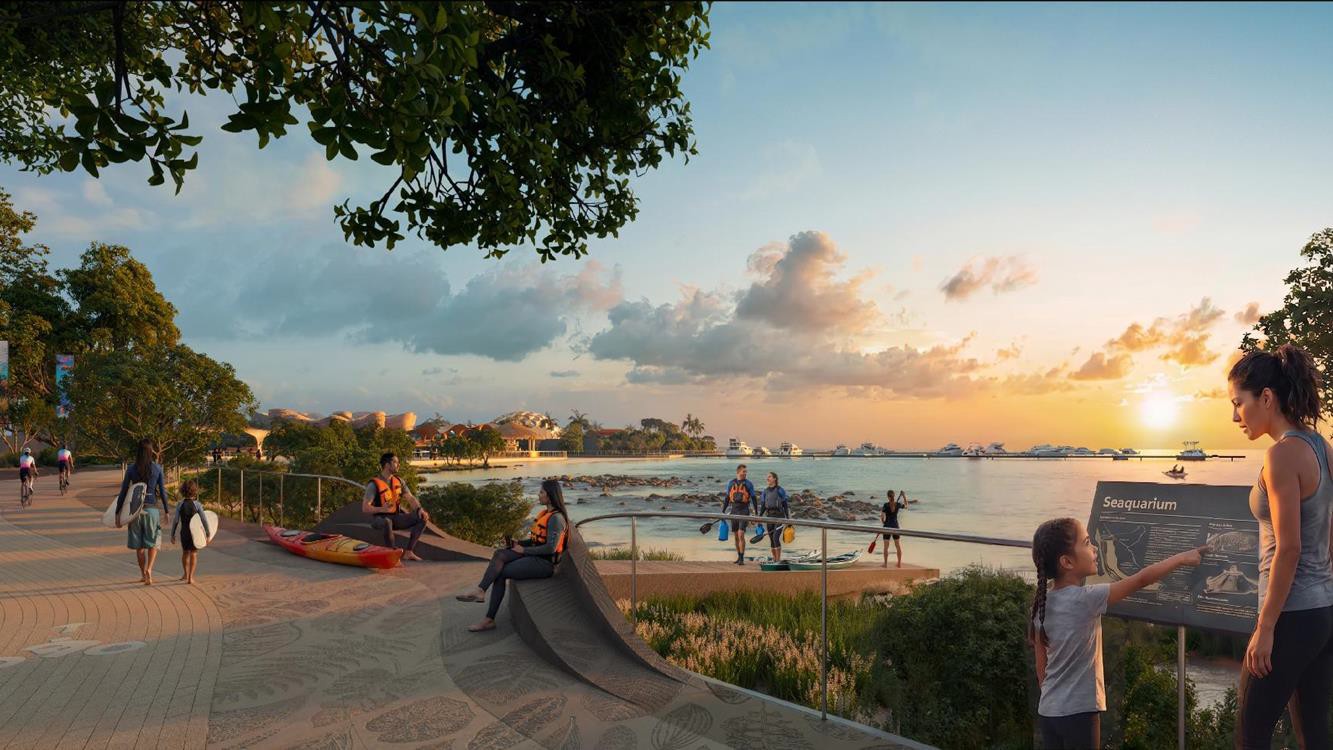
A central component of the master plan is Ocean Walk, a free, three-quarter-mile waterfront promenade designed to connect the property’s attractions and public spaces. The walkway would feature shaded pedestrian paths, native landscaping, environmental exhibits, and gathering areas overlooking Biscayne Bay. Additional outdoor amenities would include landscaped green spaces, waterfront terraces, and a public kayak launch.
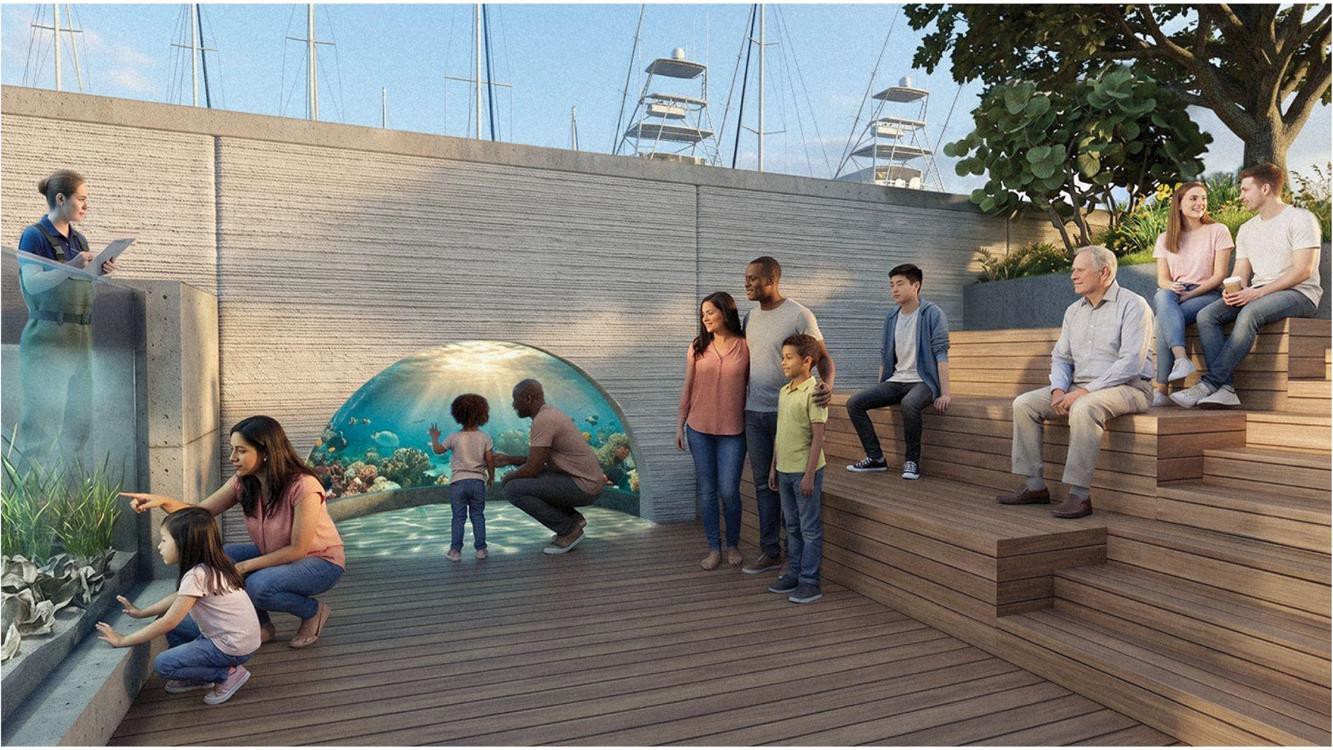
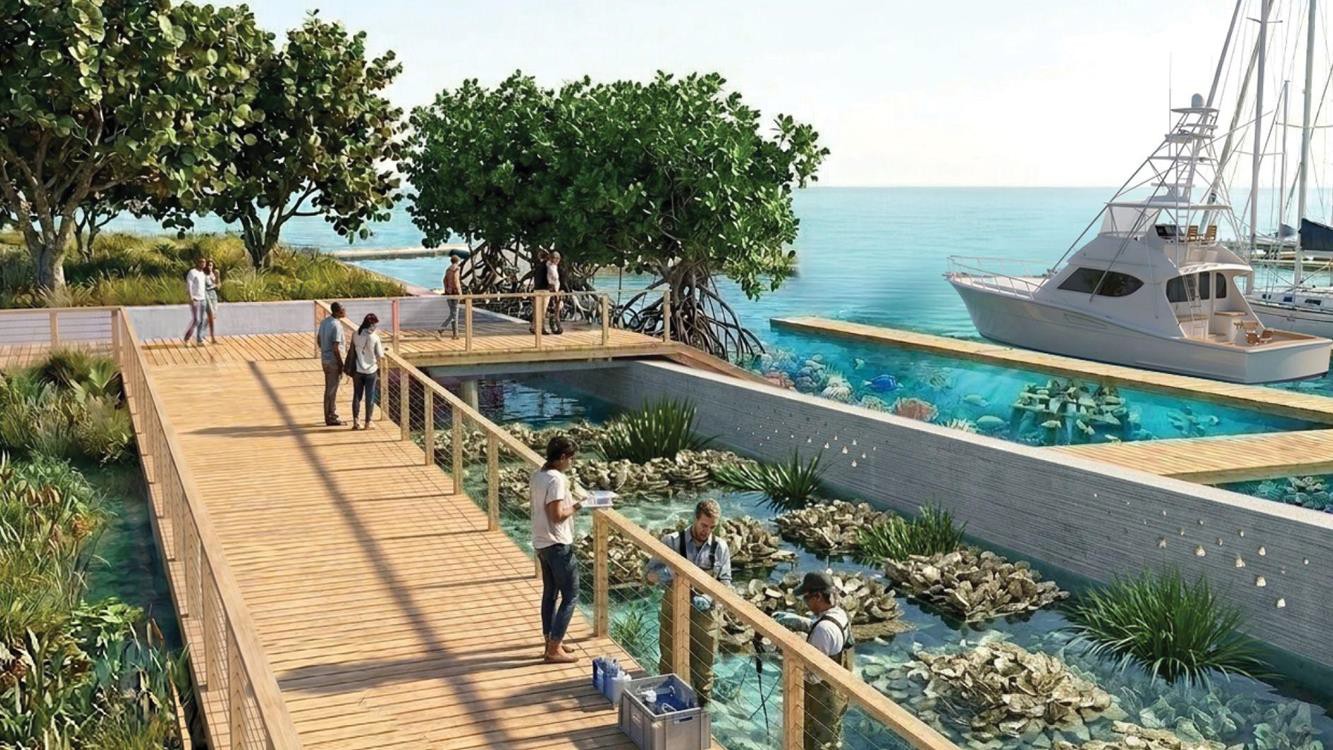
The proposed three-story aquarium would encompass approximately 83,000 square feet and feature exhibits dedicated to marine ecosystems, including displays incorporating real-time environmental data from Biscayne Bay. Along the waterfront, a separate Living Edge Underwater Classroom would provide visitors with opportunities to observe marine habitats through educational installations integrated into the property’s proposed living seawalls.
Credit: Terra
Plans also include the UM DEEP Marine Research and Innovation Center, a proposed 118,000-square-foot facility being planned in collaboration with the University of Miami’s Rosenstiel School. The center would accommodate research laboratories, classrooms, and a coral restoration facility, with programming focused on marine science, coastal ecosystems, and environmental monitoring.
Another component, known as Miami Wave, would introduce a surf lagoon and research pool intended to accommodate recreational surfing, lessons, and competitions. The facility is also proposed for scientific research examining the relationships between waves, wind, tides, storm surge, and coastal conditions.
Credit: Terra
The waterfront marina would contain 295 wet slips and dry storage for 552 vessels. The marina would be accompanied by Harbor House and Fisherman’s Village, a collection of waterfront restaurants, cafés, retail spaces, and marina services. Dedicated facilities for public safety and marine patrol operations are also included. Terra states that the marina would occupy an existing dredged basin without requiring additional dredging.
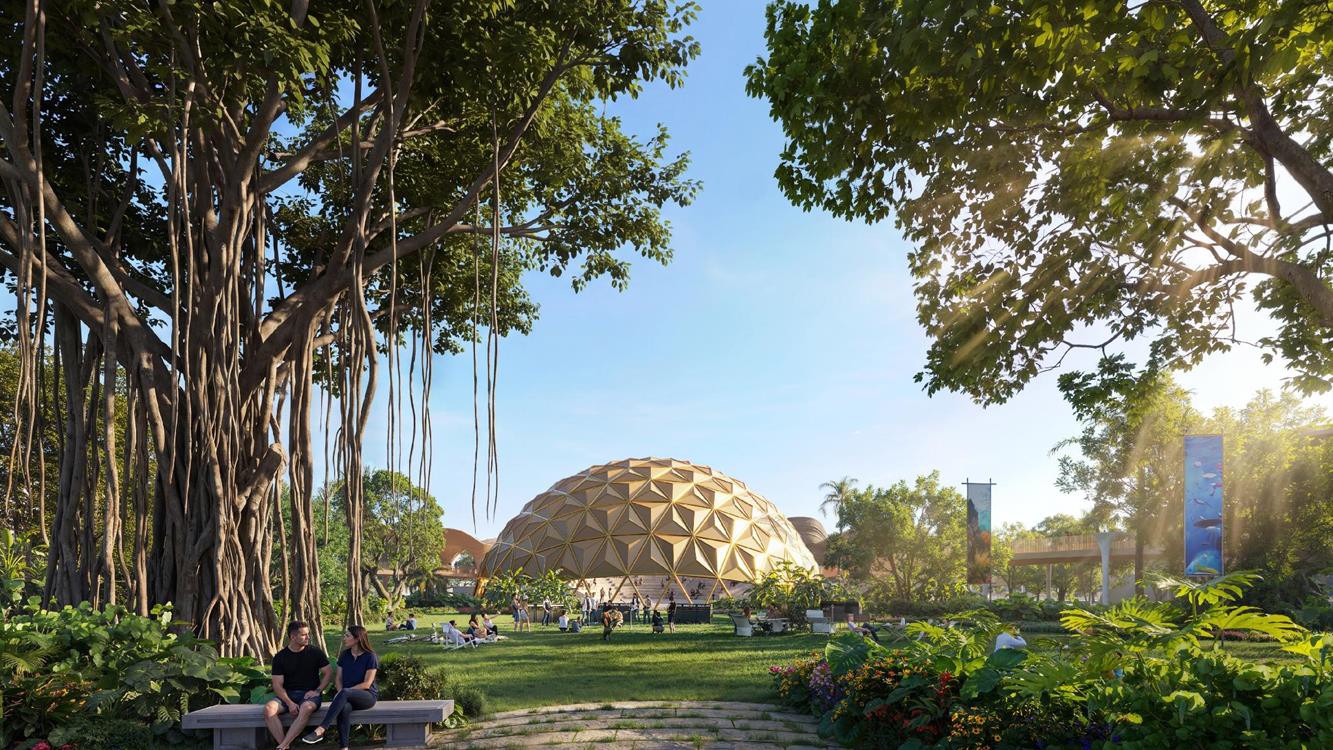
The master plan also proposes the preservation and adaptive reuse of two structures associated with the Seaquarium’s history. The Golden Dome, designed by Buckminster Fuller, would be restored and repurposed as a venue for performances, exhibitions, festivals, and community events. A landscaped lawn surrounding the structure would provide additional publicly accessible green space.
Credit: Terra
The historic Flipper House, associated with the 1960s television series Flipper, would also be preserved and restored. Both structures would remain part of the property’s redevelopment, retaining physical elements of the former marine attraction.
Environmental improvements are another component of the proposal. Terra is working with a Science Advisory Council that includes specialists affiliated with the University of Miami’s Rosenstiel School, along with experts in marine science, sustainability, and coastal resiliency. The proposed restoration program focuses on portions of the waterfront affected by historical dredging, filling, and subsequent coastal development.
Credit: Terra
“Biscayne Bay is one of South Florida’s most important natural resources, and protecting its long-term health requires innovative approaches that bring together science, conservation and responsible investment,” said Noah Valenstein, former secretary of the Florida Department of Environmental Protection and an advisor to the project. “What makes this vision particularly compelling is the opportunity to go beyond protecting the existing environment and actively improve it. From restoring marine habitats and improving water quality to integrating scientific research and public education, this plan has the potential to demonstrate how environmental restoration and public access can work hand in hand.”
Proposed shoreline improvements include 3D-printed living seawalls and modular coral sod systems designed to provide habitat for oysters, sponges, and other marine organisms. Additional restoration initiatives would address seagrass meadows, coral habitats, mangroves, and oyster ecosystems, supported by coral nursery and transplantation programs.
The environmental strategy also incorporates natural filtration systems using oysters, sponges, and wetland vegetation, alongside stormwater infrastructure intended to capture and treat runoff before it enters Biscayne Bay. Continuous monitoring of water quality, tides, and other environmental conditions is proposed, with publicly accessible data and independent scientific review intended to track performance over time.
Terra is targeting Florida Clean Marina certification within 12 months of the marina’s opening. Proposed operating measures include zero-discharge policies, free pump-out services for slip holders, marine debris prevention, and boater education. Eligible buildings would be designed to meet LEED Silver standards, while the broader development would incorporate rooftop solar panels, expanded tree coverage, wildlife-sensitive lighting, and environmentally responsible landscaping.
The redevelopment has also drawn scrutiny over the proposed marina and its potential effects on Biscayne Bay. Environmental advocates have raised concerns about impacts on seagrass, marine habitats, and water quality. Separately, two Miami-Dade County residents filed a lawsuit on October 21 seeking to require a countywide referendum before the proposed marina and associated redevelopment proceed. The legal challenge centers on provisions of the county charter governing the use of public parkland.
On November 10, a Miami-Dade County Commission committee voted 3-1 to defer consideration of the proposed 99-year lease agreement following concerns about the amount of time available for public review. The decision came after the County Commission had advanced the land use amendment on first reading in October. Final approval of the land use changes, zoning, and lease agreement remains necessary, along with other applicable governmental and regulatory approvals.
Subscribe to YIMBY’s daily e-mail

Follow YIMBYgram for real-time photo updates
Like YIMBY on Facebook
Follow YIMBY’s Twitter for the latest in YIMBYnews
Be the first to comment on "Terra Unveils Redevelopment Plans For Miami Seaquarium On Virginia Key, Including New Aquarium, Marina, And Public Baywalk"