
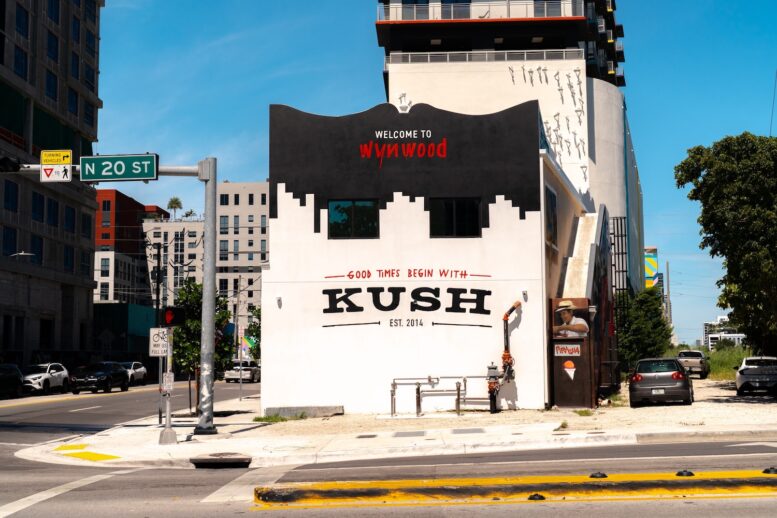
Kush Hospitality and founder Matt “Kush” Kuscher have transformed a historic 1926 building at 2003 North Miami Avenue in Miami’s Wynwood neighborhood into Kush Korner, a 7,500-square-foot mixed-use development comprising 10 affordable workforce housing units, a restaurant, a cocktail bar, and a tattoo studio. The redevelopment was undertaken in partnership with the Omni Community Redevelopment Agency, with partial financial support from the Public Benefit Trust Fund. Kush Wynwood is scheduled to reopen this November following a two-year closure.
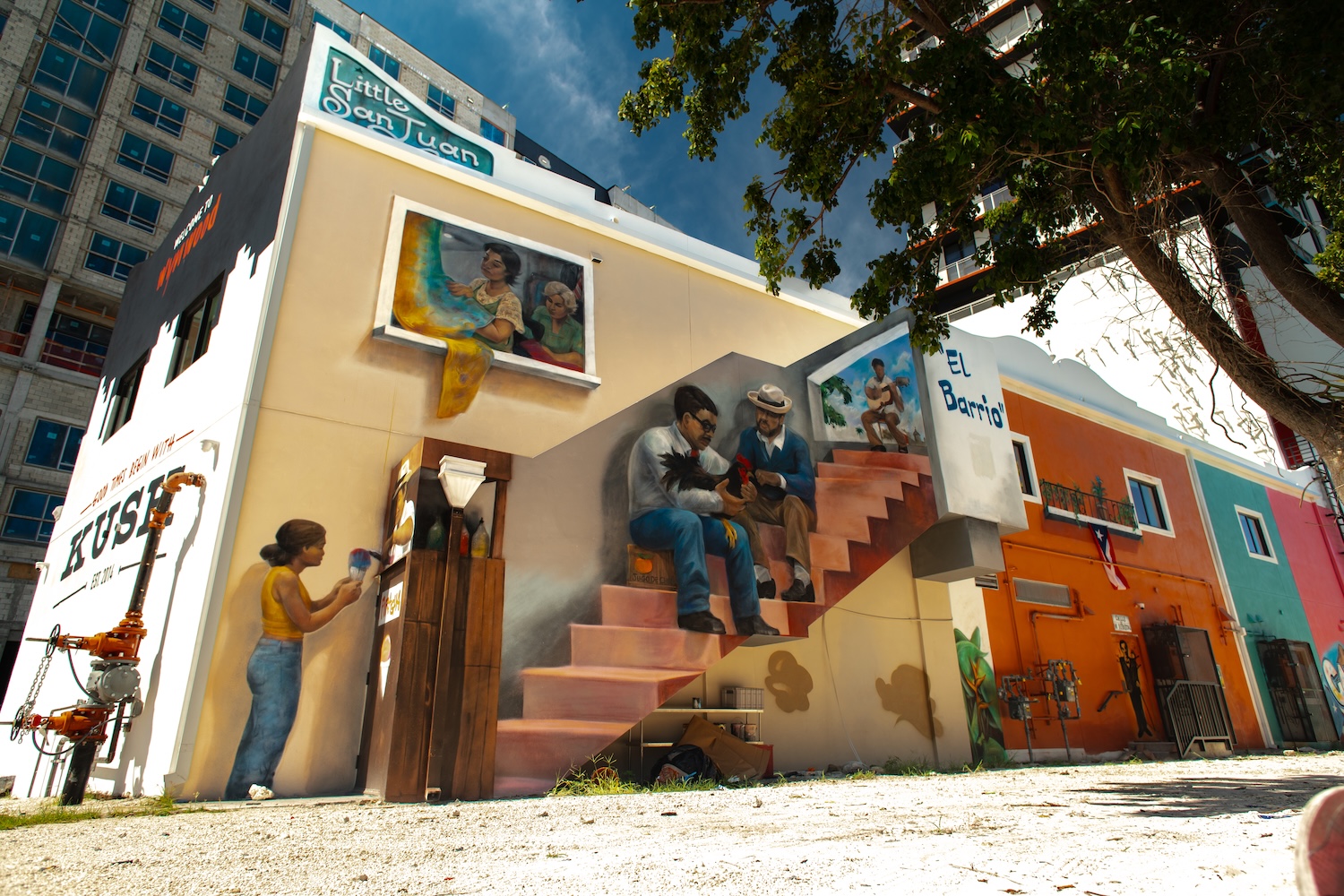
Originally constructed in 1926 by Samuel Dubbin, a member of Miami’s early Jewish community, the flatiron-style building was once part of a residential enclave known as Little San Juan. The structure has housed apartments, restaurants, and a pharmacy over its century-long history. The property was previously slated for demolition by the city, prompting Kuscher to undertake a four-year effort to preserve and repurpose the building.
Credit: Kush Wynwood
The redevelopment introduces 10 residential micro-units above the restaurant, intended to provide affordable housing for hospitality industry workers. The apartments are subject to a 50-year affordability agreement. Kuscher pursued the residential component in response to rising housing costs, transportation challenges, and lengthy commutes experienced by employees in the hospitality industry.
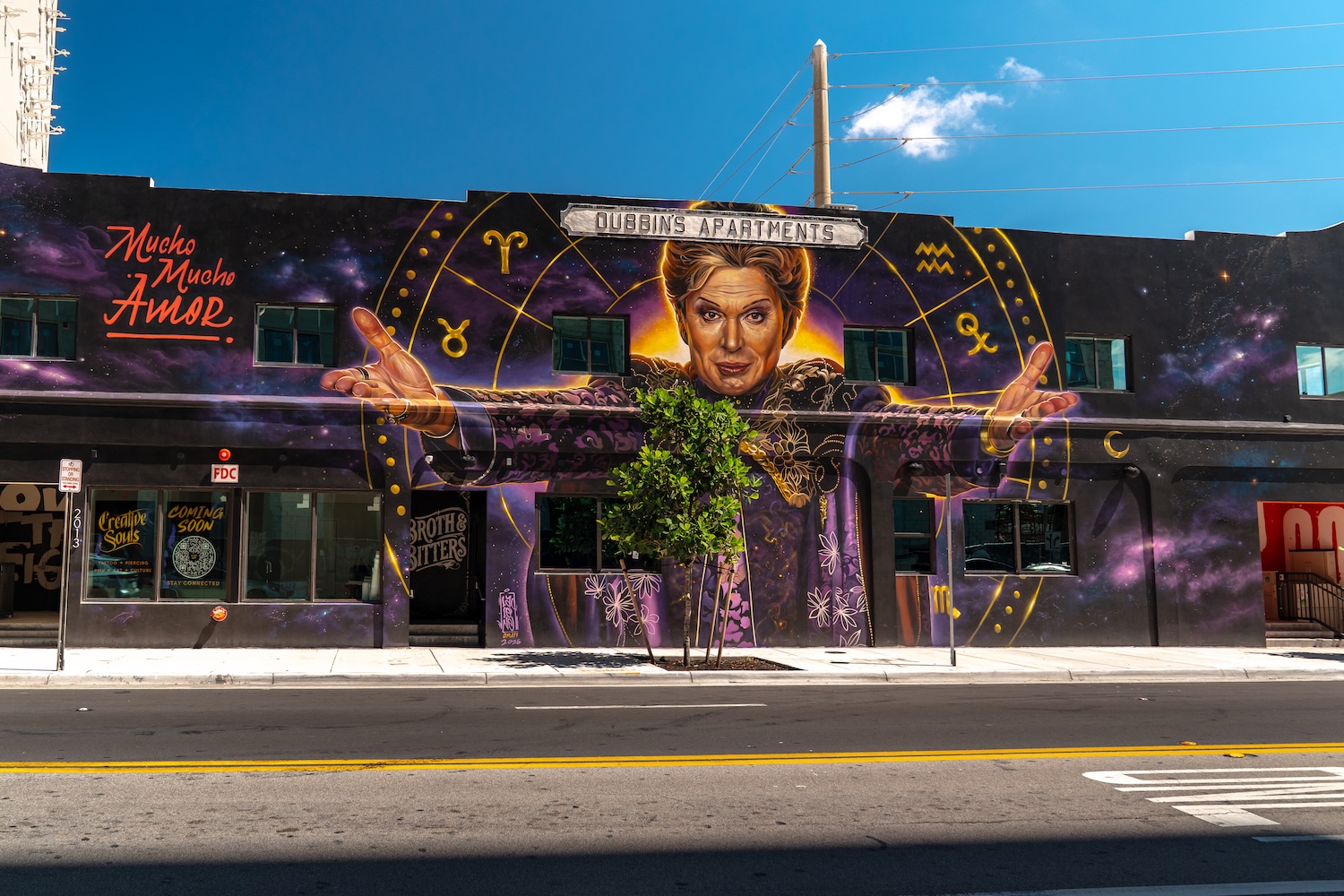
The commercial component includes the newly redesigned 2,200-square-foot Kush Wynwood restaurant, Broth and Bitters, a cocktail bar by bartender Erika Holtz, and Creative Souls, a tattoo studio operated by local artist James Moyer.
Credit: Kush Wynwood
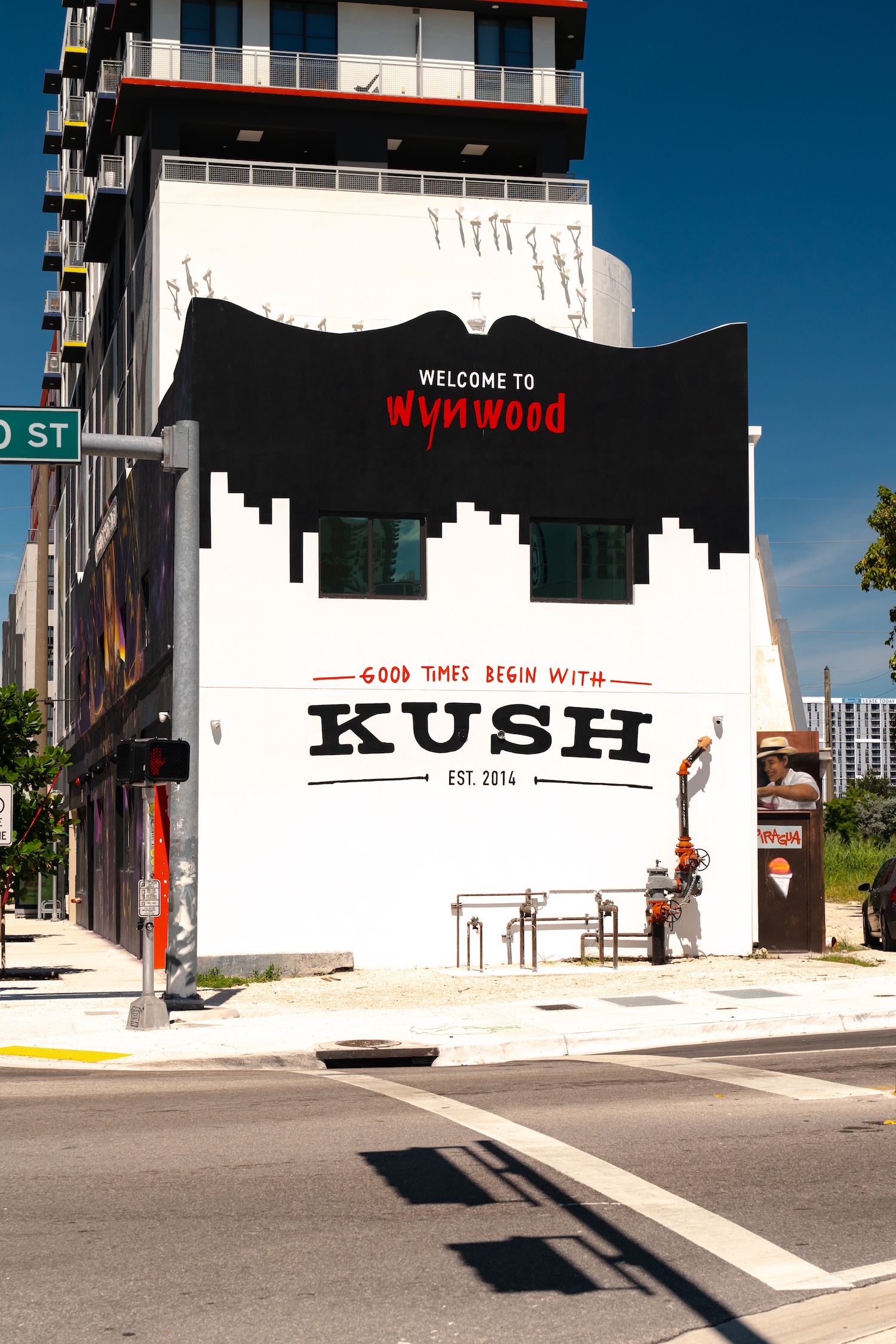
The exterior of the building features several commissioned murals referencing Miami’s cultural history and Wynwood’s artistic heritage. A mural depicting Walter Mercado by artist Lalone overlooks North Miami Avenue, while a work by Krave pays tribute to Little San Juan and the neighborhood’s Puerto Rican roots. A black-and-white “Welcome to Wynwood” mural by Camilo Rojas marks the entrance, and an additional mural by SNEAK adorns the side of the building.
Rojas also designed an installation within the entrance corridor featuring the handwritten names of 180 artists who contributed to Wynwood’s development as an arts district. Kuscher collaborated with eight longtime Miami artists in compiling the list.
Credit: Kush Wynwood
The restaurant features seating for 50 patrons, including a 12-seat island bar clad in dark green tile, surrounded by dark red brick walls. Additional artwork extends into the staircase and residential corridors, including Rojas’ “Home Sweet Home” installation. More than 25 works by 20 artists are displayed throughout the property, with a newspaper-style guide at the entrance identifying the contributing artists and their installations.
“Everything in my restaurants has a story, and Kush Wynwood may have more than any of them,” said Kush. “The history of the building, the evolution of the neighborhood and the pieces of Miami culture we’ve collected are woven throughout the experience. I want guests to discover something new every time they visit. It’s a little weird, deeply personal and authentically Miami.”
Kush Wynwood previously operated at the property for nearly a decade. The restaurant will reopen with a menu incorporating dishes from more than a dozen concepts within Kush Hospitality’s portfolio, alongside locally produced craft beers and regular neighborhood-focused programming.
Subscribe to YIMBY’s daily e-mail

Follow YIMBYgram for real-time photo updates
Like YIMBY on Facebook
Follow YIMBY’s Twitter for the latest in YIMBYnews
Be the first to comment on "Historic Wynwood Building Transformed Into Mixed-Use Development With Workforce Housing At 2003 North Miami Avenue"