
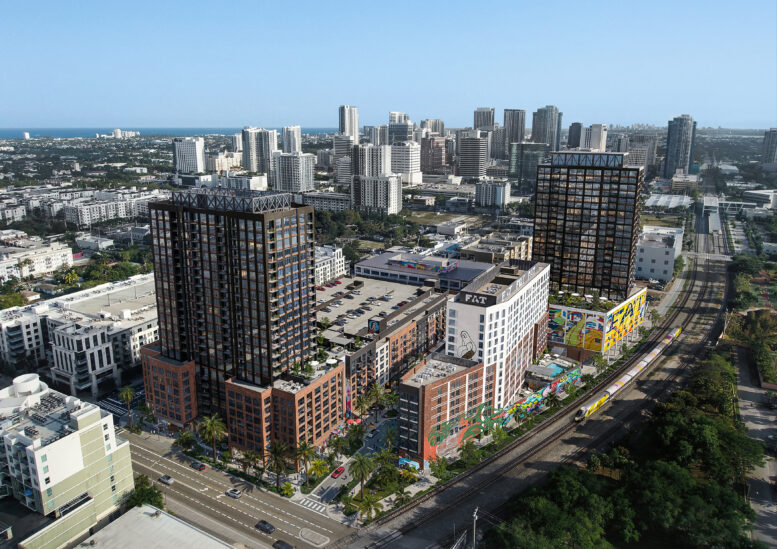
Construction continues to advance at FAT Village, the 5.6-acre mixed-use redevelopment transforming a key portion of Downtown Fort Lauderdale’s Flagler Village. Designed by Solomon Cordwell Buenz (SCB) with DLR Group leading the office design and developed by Hines and Urban Street Development, the $500 million master plan is reshaping the former arts district into a contemporary, walkable destination featuring multiple towers. The project aims to deliver approximately 600 multifamily units, along with expansive office, retail, and cultural spaces.
Construction began in March 2024, and the pace since has been quick. The 13-story tower topped off in March 2025, followed by the 24-story tower in May 2025, while the office building is expected to top off soon, or may already have by the time of this article.
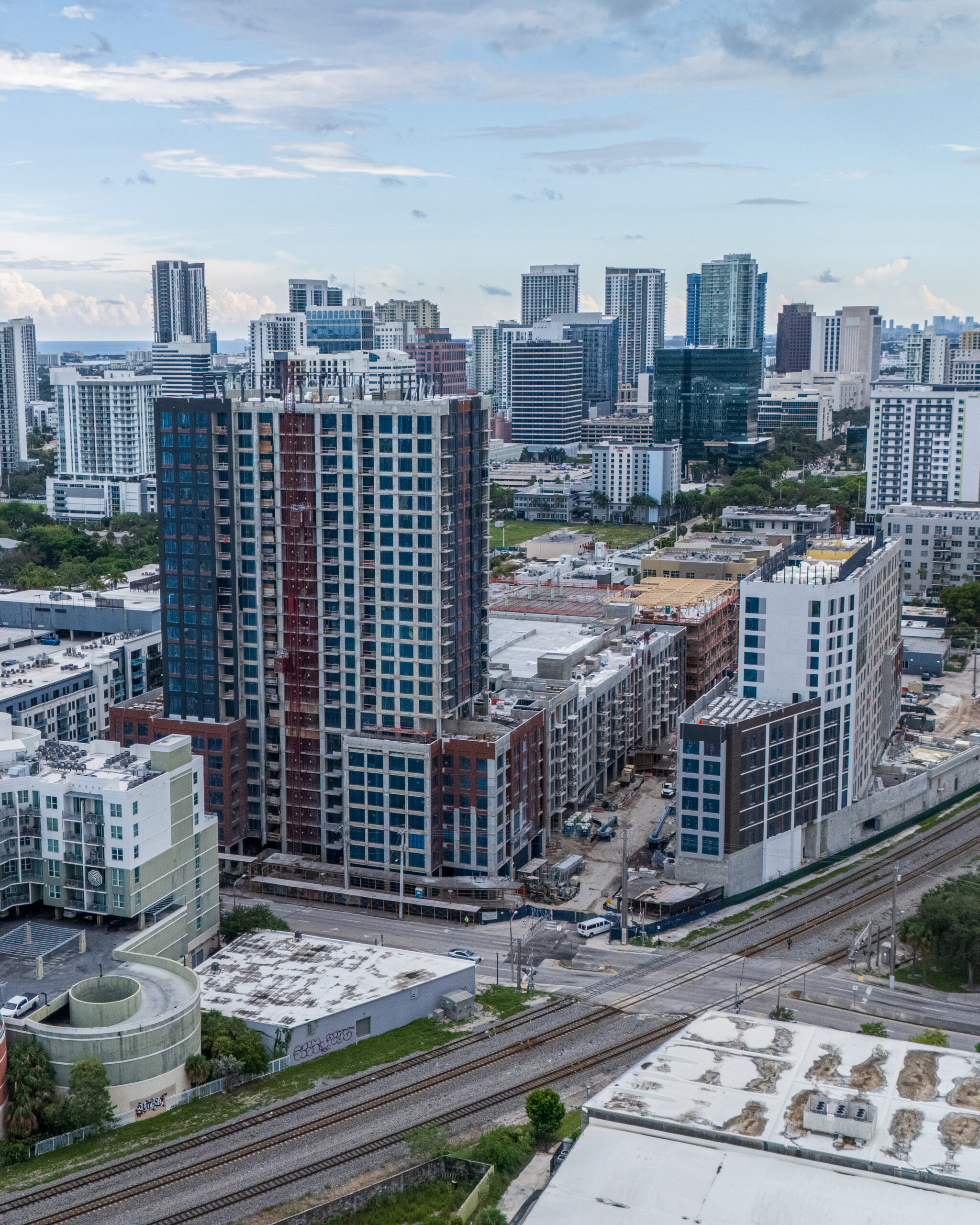
Photo by Oscar Nunez.
Recent aerial photos show exterior work is progressing steadily on the residential component, with window installation across both towers nearing completion. The 24-story tower is being finished in dark, smooth concrete with painted red accents.
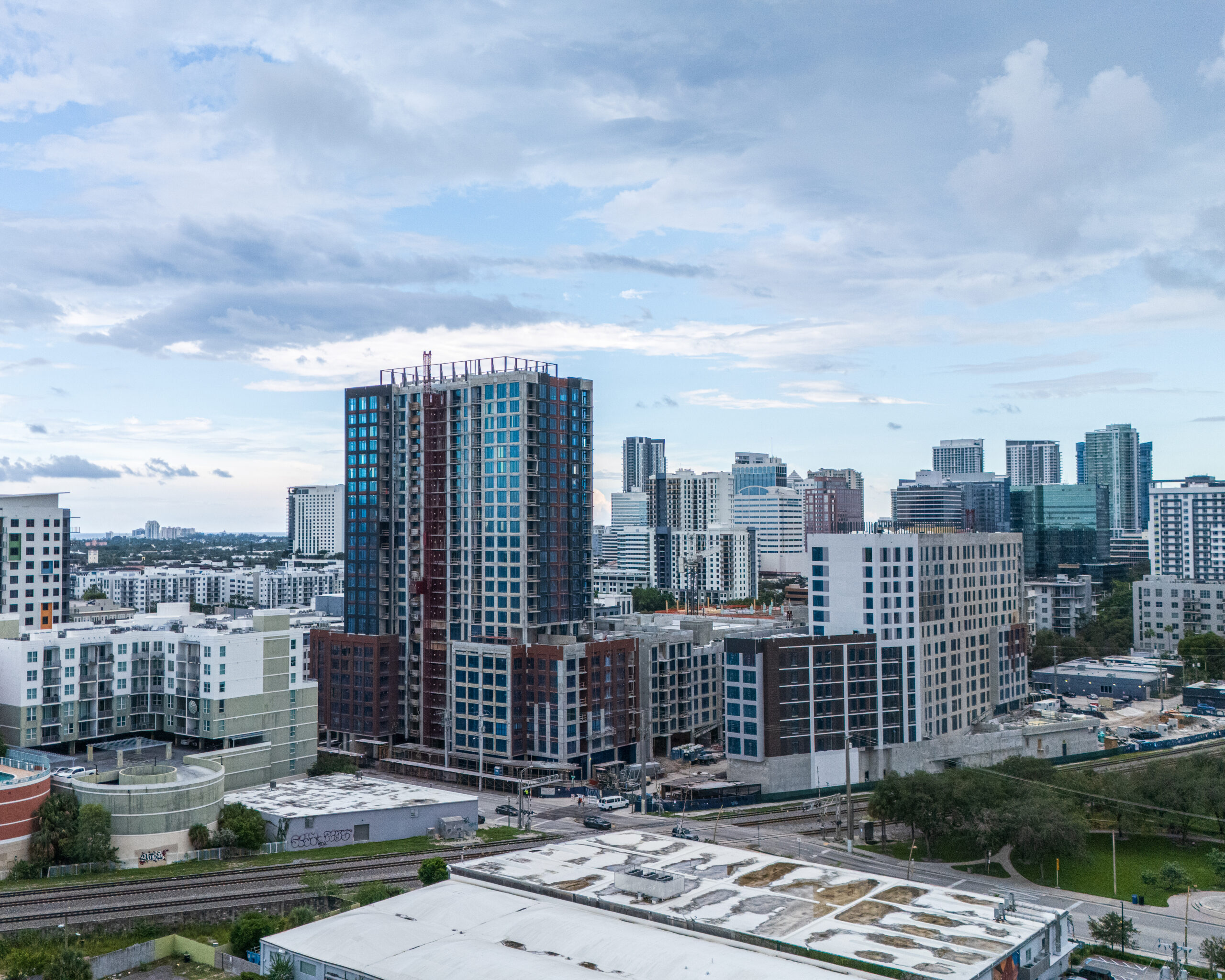
Photo by Oscar Nunez.
Its seven-story podium, which contains parking and additional residences, is being clad in a mix of red, light gray, medium gray, and dark brick, with red brick serving as the predominant material.
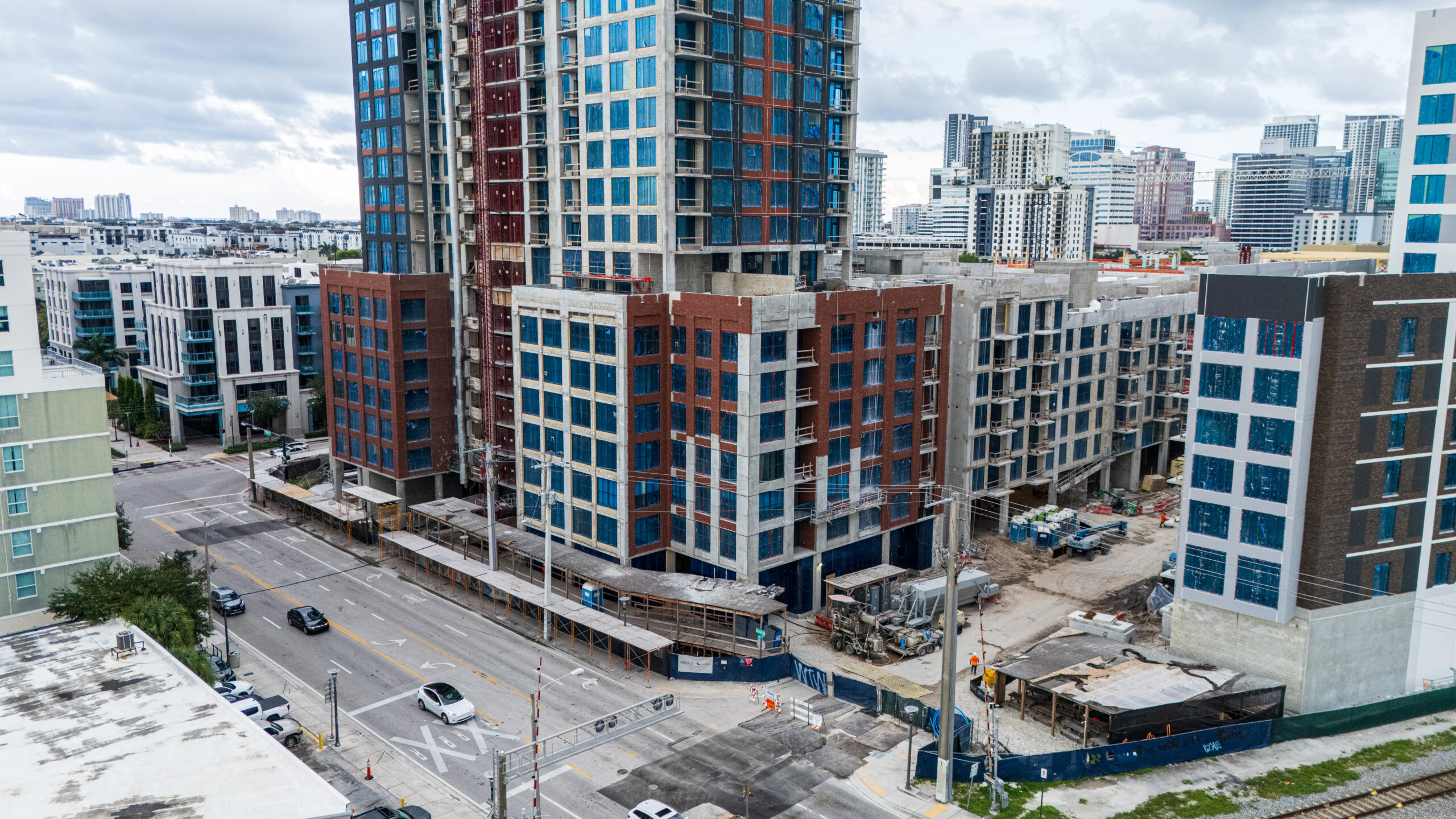
Photo by Oscar Nunez.
The 13-story tower displays a varied palette, featuring dark brick and red brick at opposite ends, paired with smooth concrete finishes painted white, light gray, and dark gray.
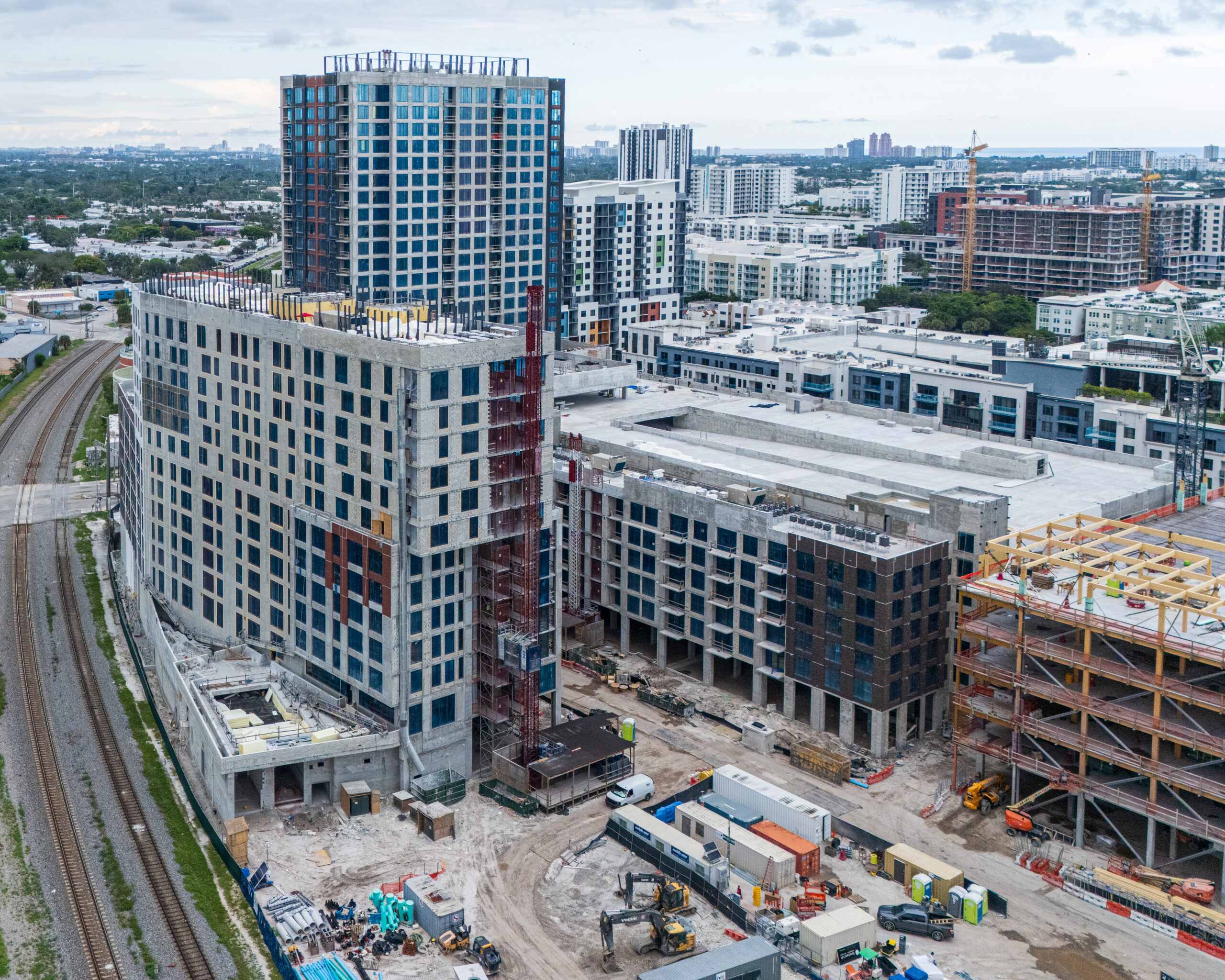
Photo by Oscar Nunez.
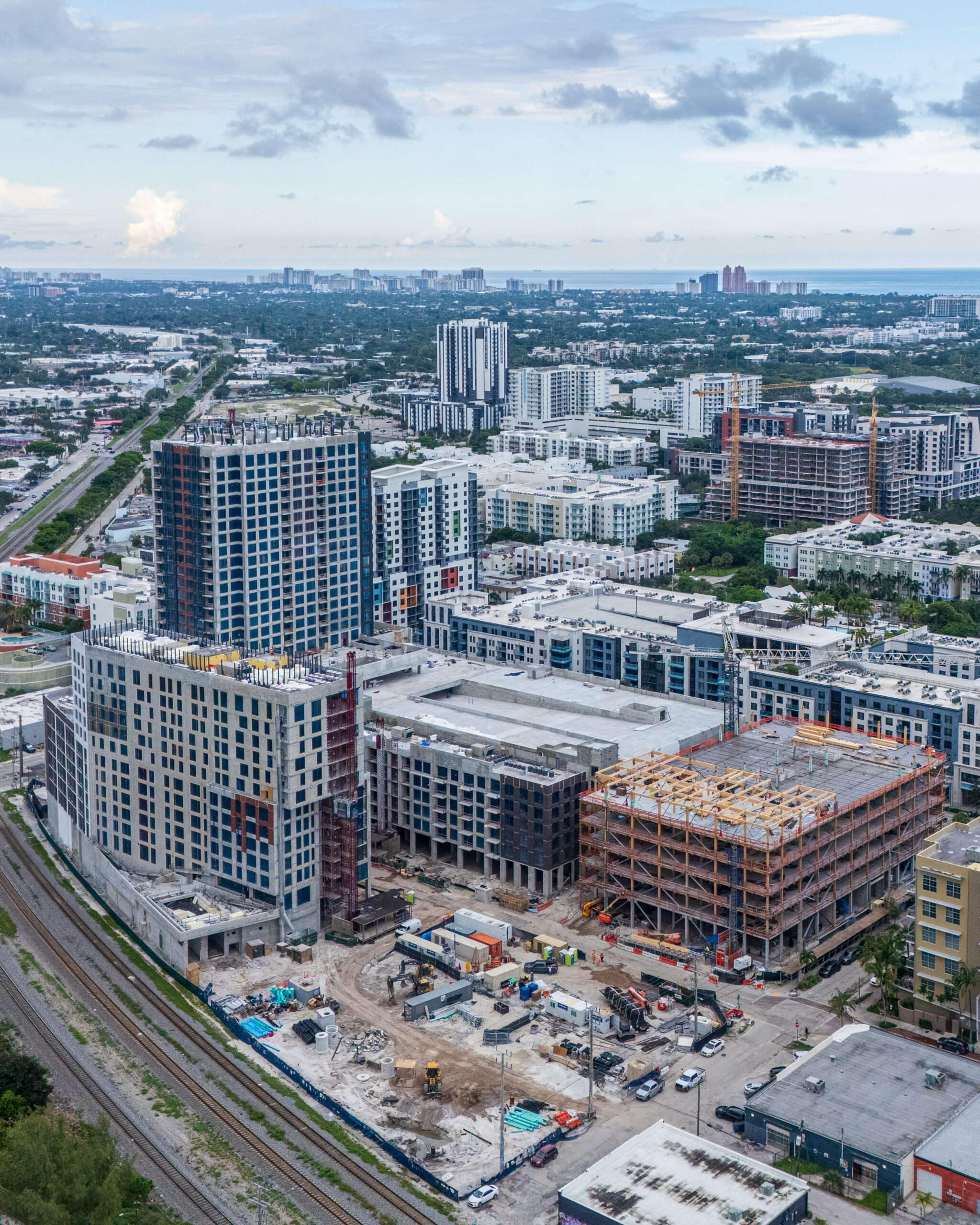
Photo by Oscar Nunez.
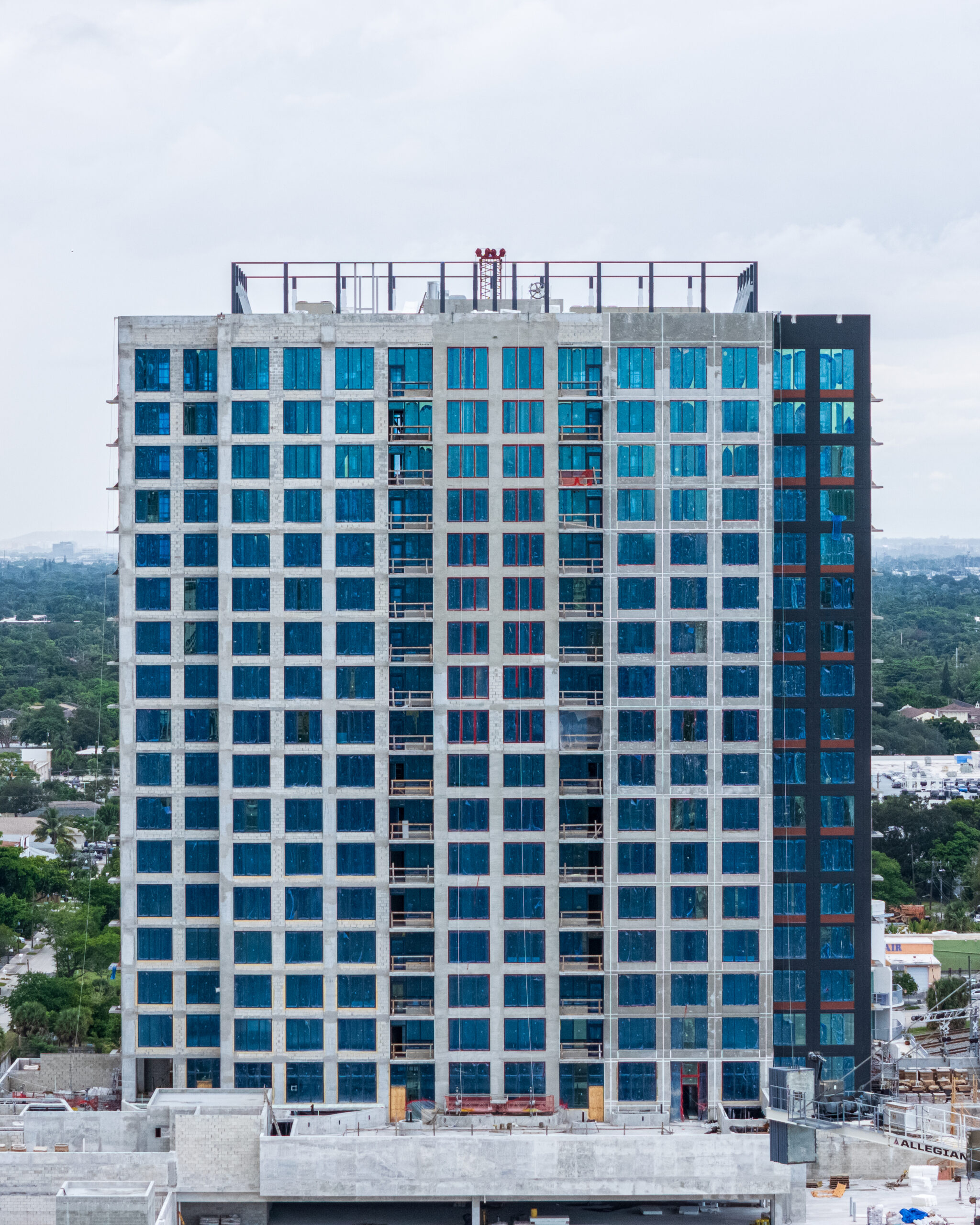
Photo by Oscar Nunez.
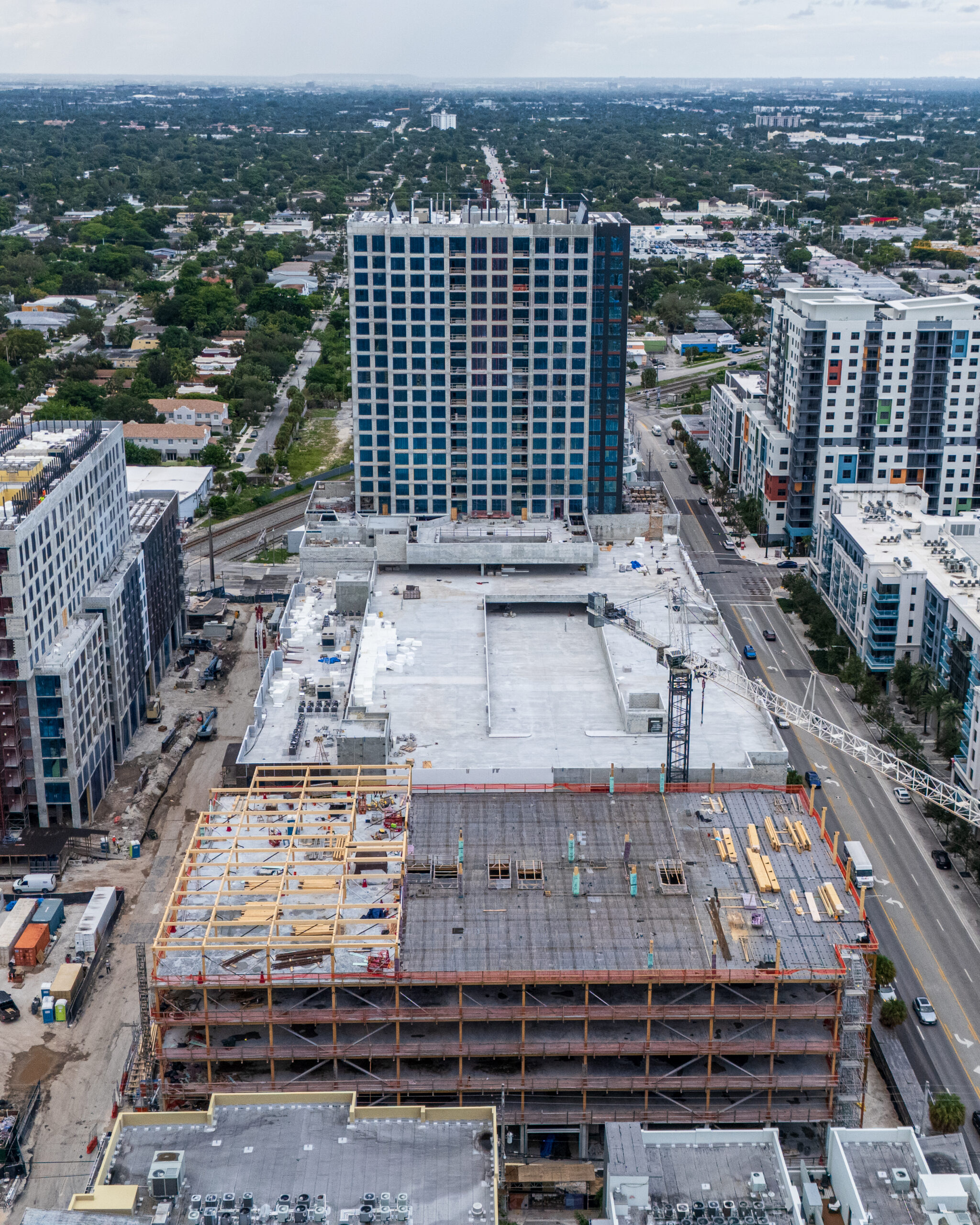
Photo by Oscar Nunez.
The T3 office building, located at the southern end of the site, can be seen in the aerial photos nearing completion of its structural phase.
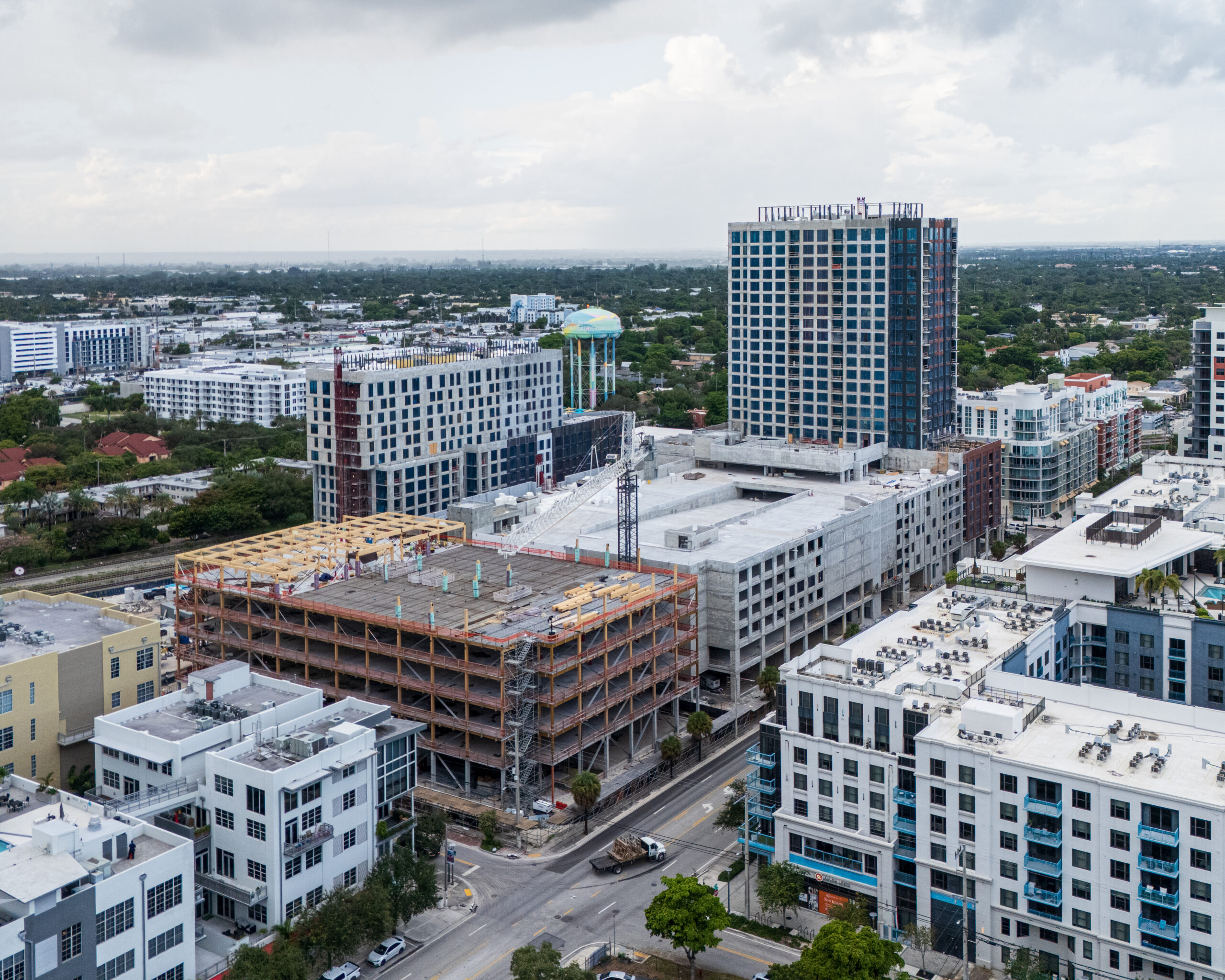
Photo by Oscar Nunez.
The six-story structure is being built using mass timber construction, a sustainable method that allows for faster assembly, cost efficiency, and a reduced environmental footprint compared to conventional materials. Its hybrid timber-and-steel frame is clearly visible from above, with wooden structural members interlaced with angled steel cross-bracing between each level.
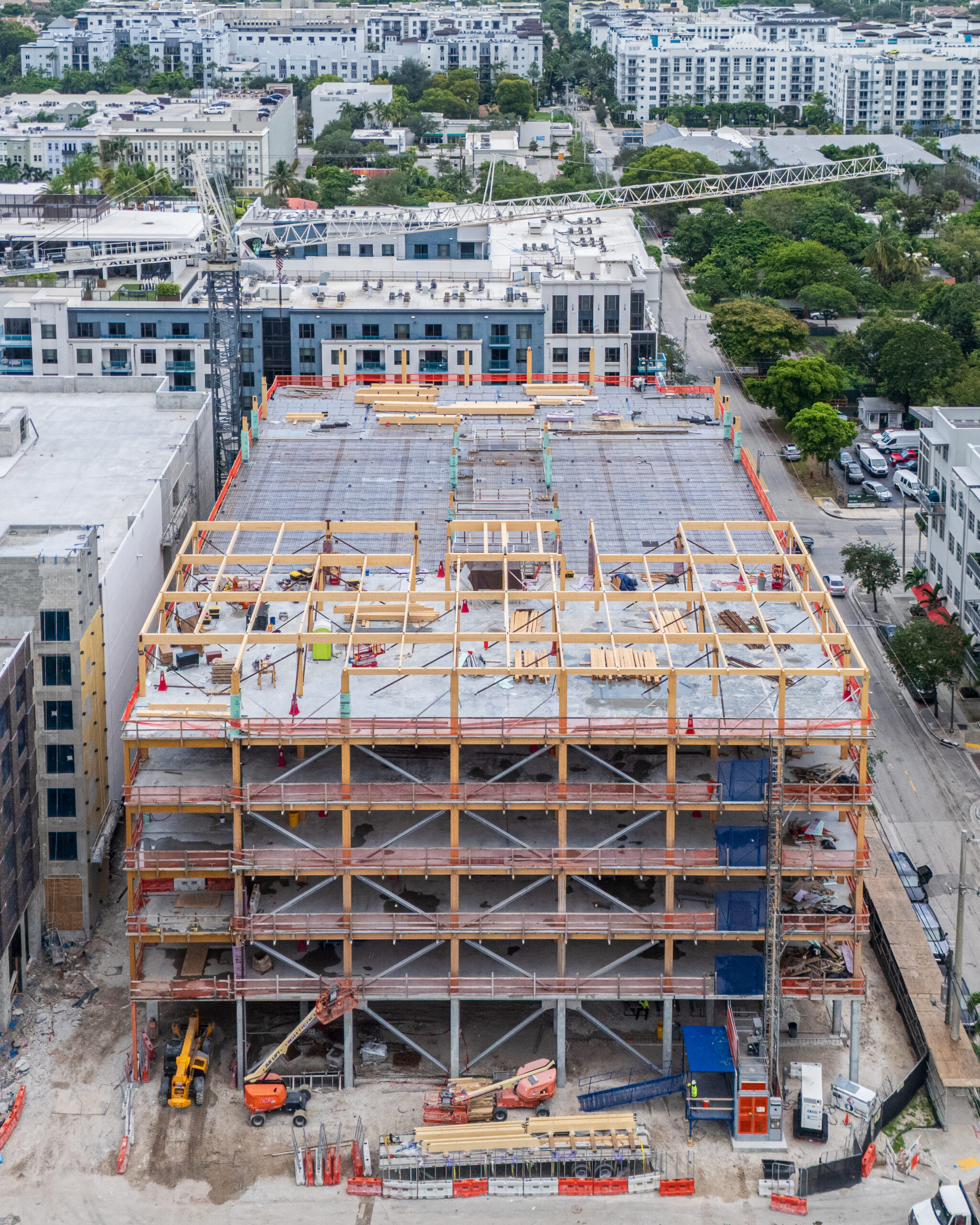
Photo by Oscar Nunez.
Once completed, it will stand as South Florida’s first mass-timber office tower and serve as the centerpiece of FAT Village Fort Lauderdale. The building is part of Hines’ national T3 (Timber, Transit, and Technology) portfolio, which combines sustainable materials with forward-thinking workplace design. Blanca Commercial Real Estate is handling pre-leasing for the office component.
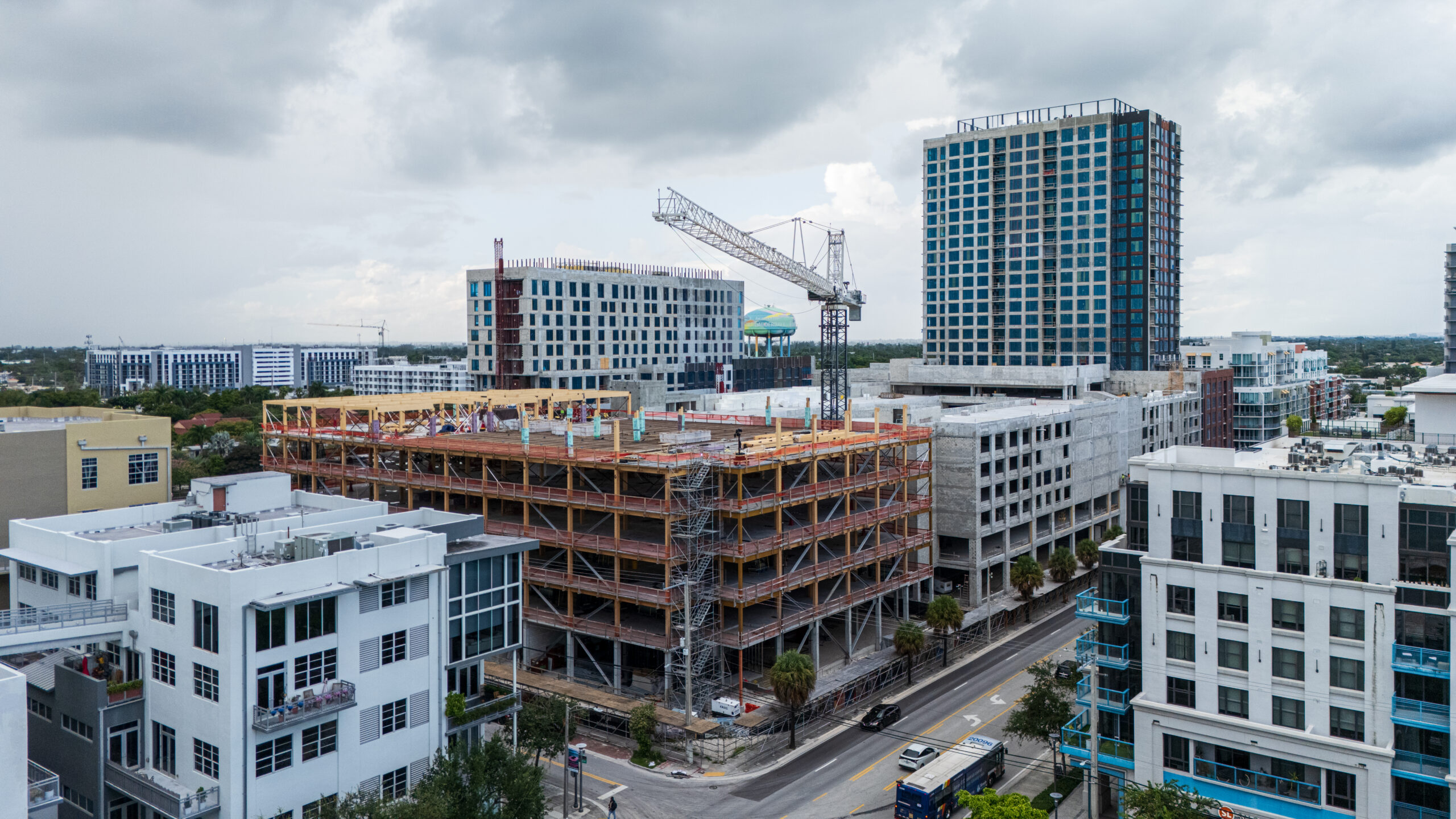
Photo by Oscar Nunez.
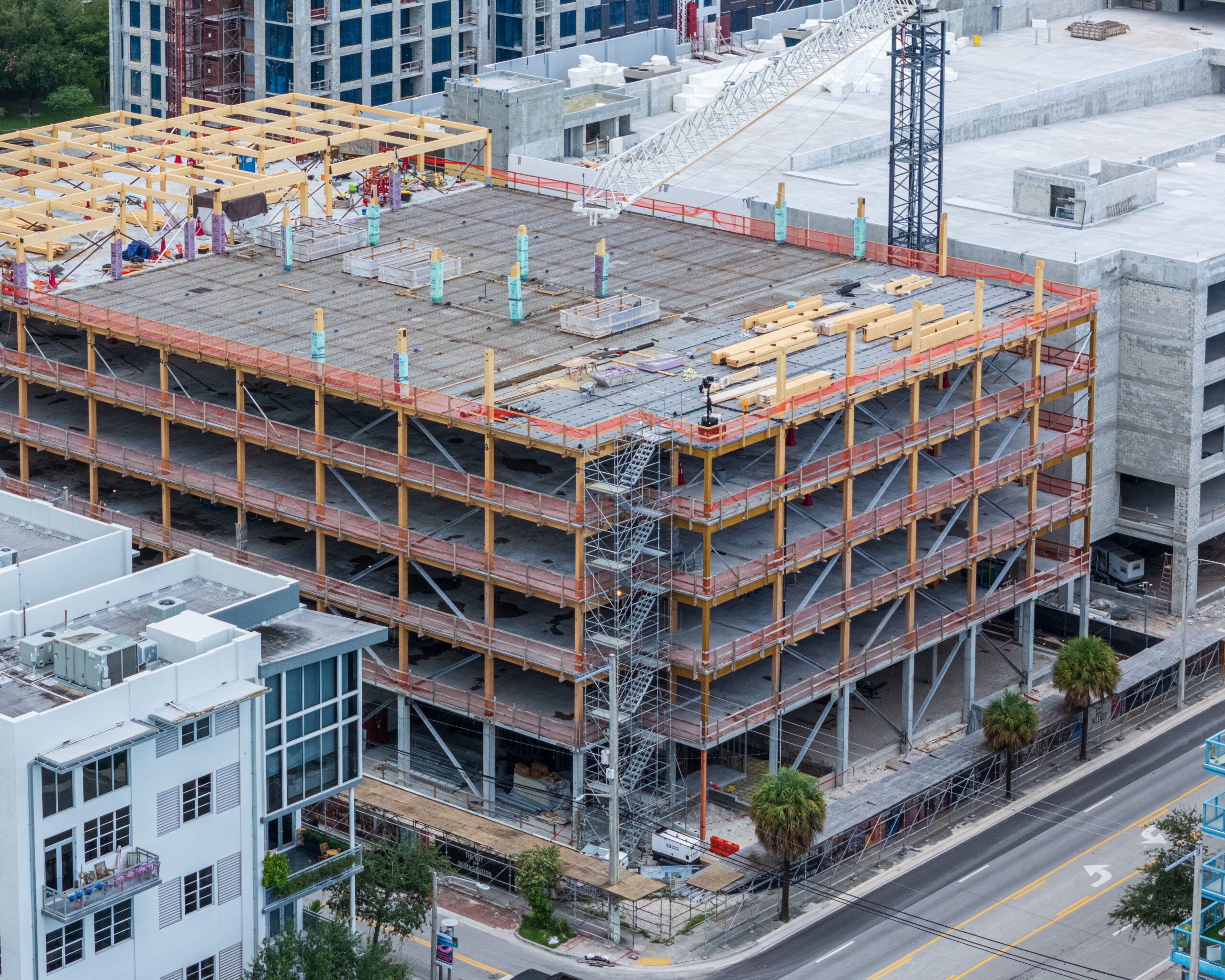
Photo by Oscar Nunez.
Phase I of FAT Village will deliver 600 multifamily units across two residential towers, 73,000 square feet of curated food and beverage offerings, shopping, entertainment, art studios, and galleries, as well as 176,000 square feet of office space within the Hines T3 creative office building and a parking structure providing more than 1,100 spaces.
Phase II will introduce the final 25-story high-rise, which will rise 305 feet adjacent to the 13-story tower. Depending on market conditions, the building could be converted into a hotel, a second office tower, or possibly another multifamily development.
The first apartment towers are expected to open by mid-2026, with shops, restaurants, and offices coming online toward the end of 2025. A timeline for the final tower has yet to be announced.
Subscribe to YIMBY’s daily e-mail
Follow YIMBYgram for real-time photo updates
Like YIMBY on Facebook
Follow YIMBY’s Twitter for the latest in YIMBYnews
Where will the rain go?!?!
So excited for this forward thinking project. FLL needs this type of development. Still too much parking but, it’s Florida. Hope they get great independent tenants.
Redevelopment is great. Development. In natural areas and rural areas is not good. Ty guys. My grandchild thank you also
Shameful.
This development should’ve been more creative, distinctive…interesting.
Shameful.
This development should’ve been more creative, distinctive…interesting; a greater reflection of the energy that was present, different from the established density of existing housing development surrounding it.
The specialness of Ft. Lauderdale will suffer for this.
Developer greed is killing the vibrancy of our South Florida cities, that would be extremely expensive to correct. Planners and other built environment design professionals must be given more latitude in creating the interest and excitement for truly successful urban development.