
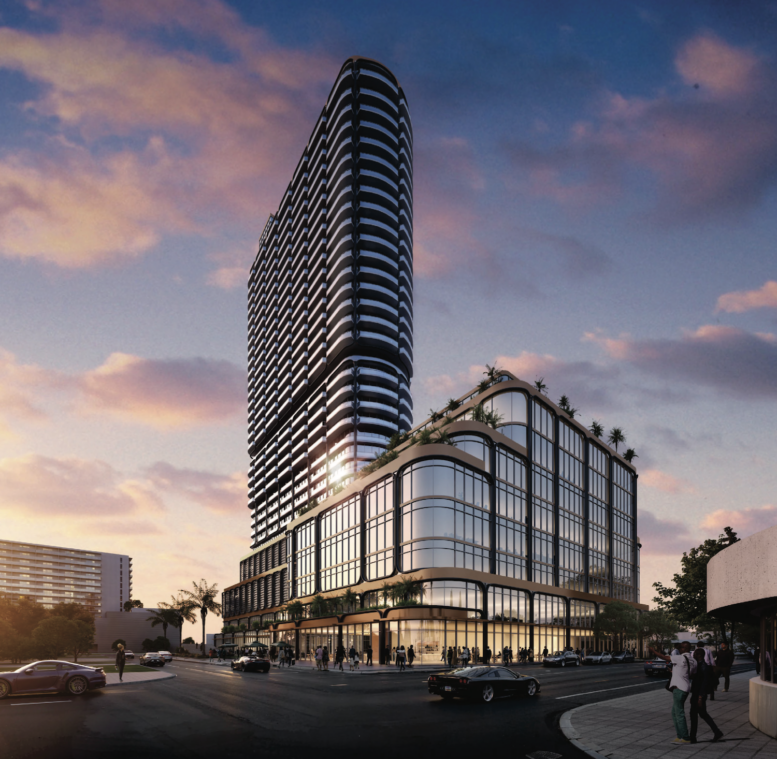
Plans have been filed with Miami’s Urban Development Review Board for Helm Design District, a mixed-use development proposed at 220 NE 43rd Street in Miami’s Design District. The application was submitted by 4201 NE 2 Ave LLC, an affiliate of HELM Equities LLC, and outlines a two-building project consisting of a 36-story residential tower and an 8-story commercial and office building. The development is designed by CUBE3, with Savino Miller serving as landscape architect, Kimley-Horn as civil and traffic engineer, and SMGQ Law representing the applicant on land use matters.
The 1.89-acre site is located within the Miami-Design District Retail Street Special Area Plan and is identified as Block 5 East. The property carries a Future Land Use Map designation of Restricted Commercial and is governed by the Design District Special Area Plan framework.
Credit: Cube 3.
The proposed development is planned as a Live Local Act project, taking advantage of state legislation that allows qualifying mixed-use developments to access enhanced zoning incentives. Eligibility was confirmed by the City of Miami through a zoning verification letter issued on December 20, 2023. Under the Live Local Act, the project may utilize the highest permitted density, maximum height allowed within one mile of the site, and the maximum floor area ratio permitted within the municipality.
Credit: Cube 3.
According to the UDRB submittal, Helm Design District is proposed to comprise approximately 971,760 gross square feet of space. The program includes 56,409 square feet of commercial space primarily located on the ground floor and mezzanine levels of the western building, along with 101,433 square feet of office space. The residential component consists of 278 dwelling units, of which at least 40 percent will be designated as affordable rental units in accordance with Live Local Act requirements.
Credit: Cube 3.
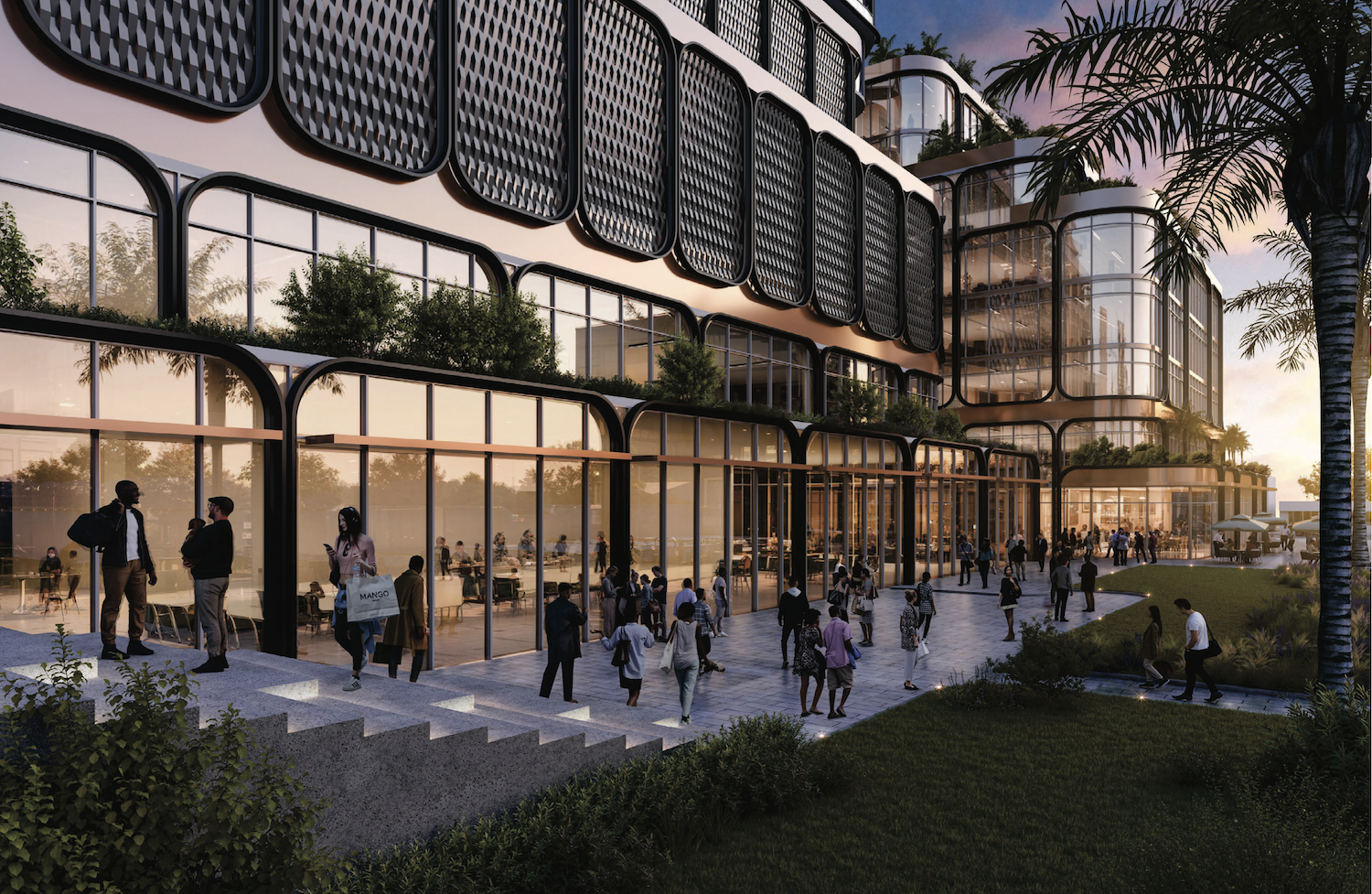
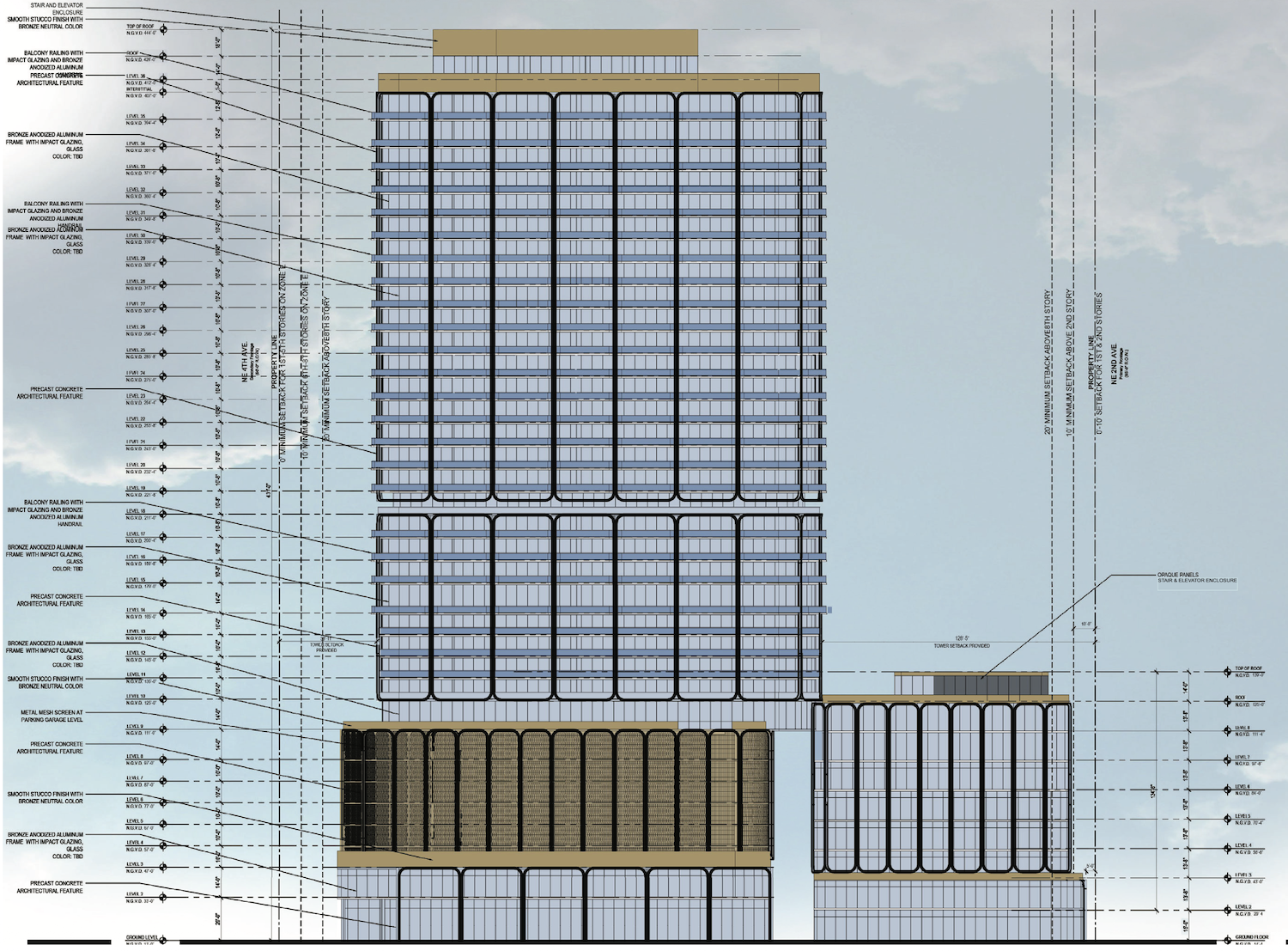
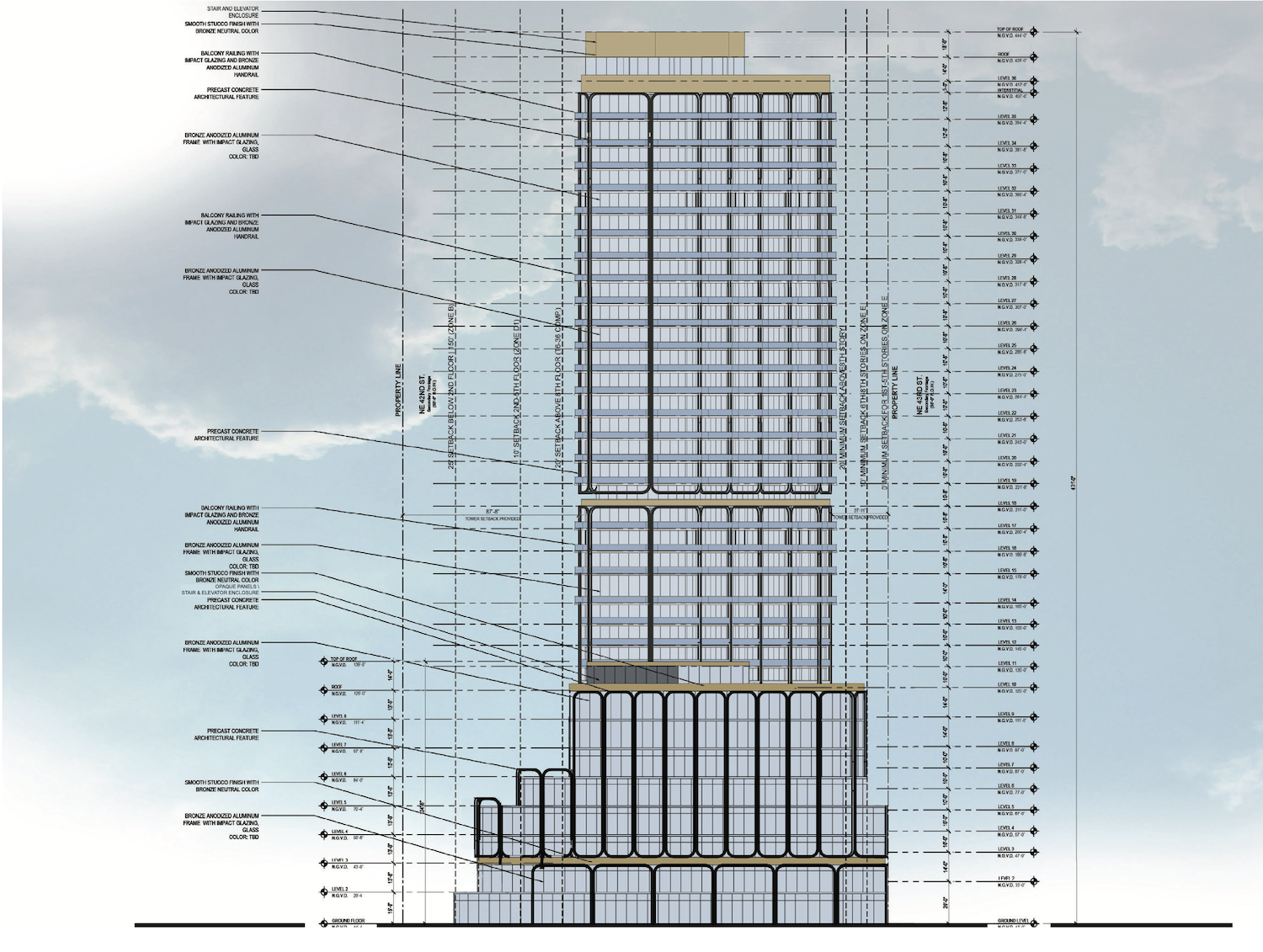
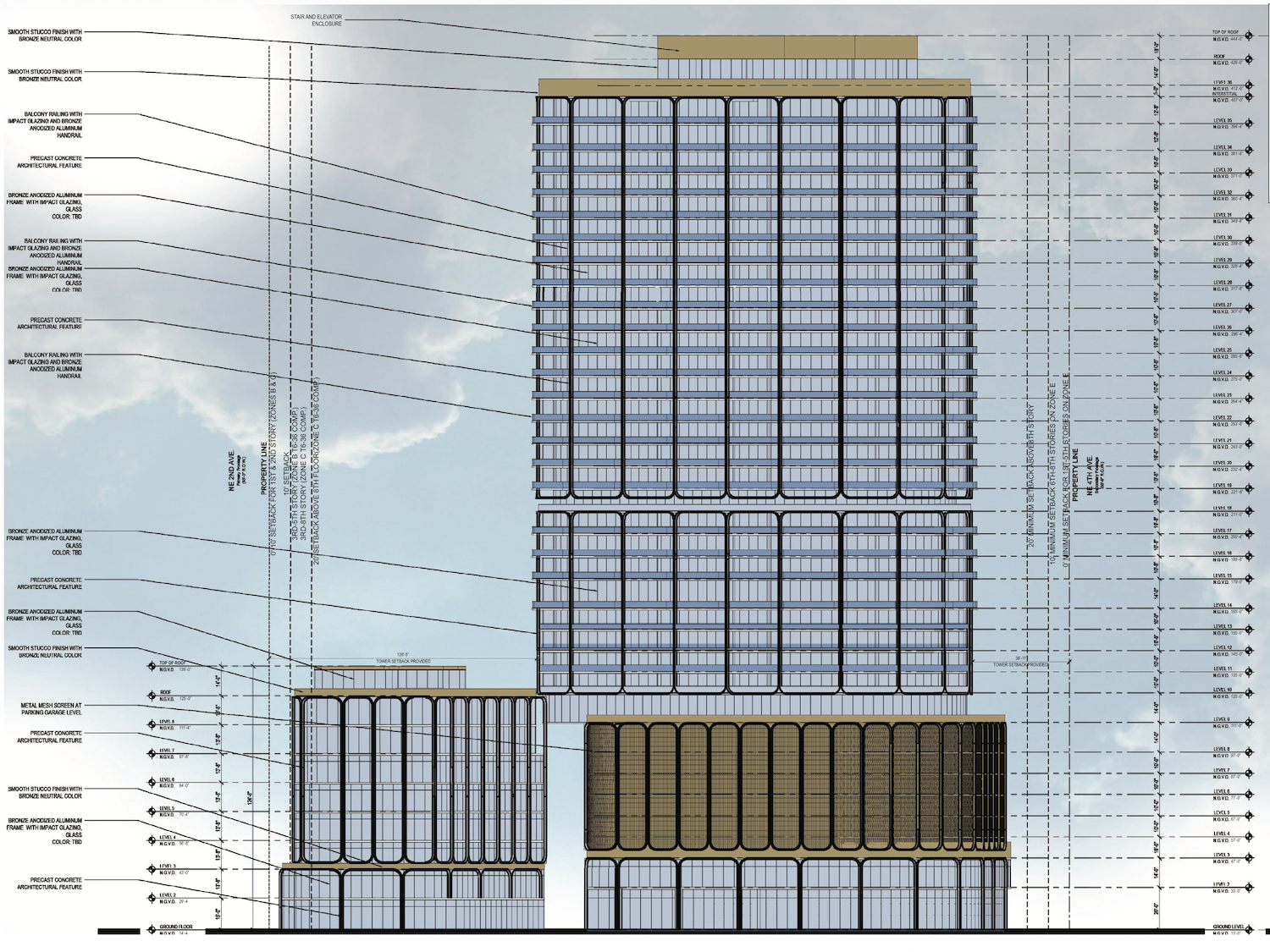
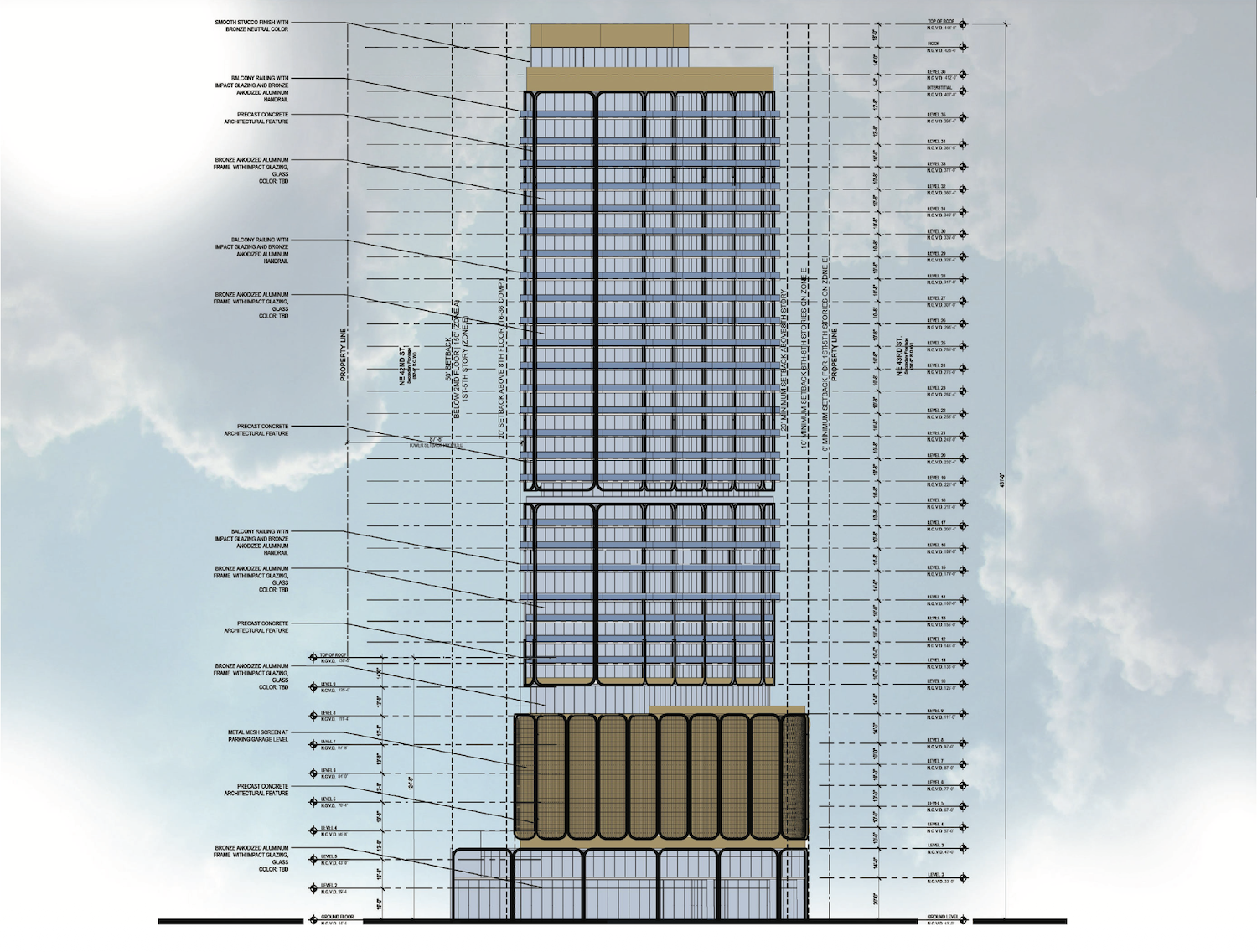
Renderings illustrate a vertically layered composition that transitions from a low-rise streetwall condition to a sculpted high-rise tower. The building massing incorporates a series of setbacks and terraces that mediate between the pedestrian scale of the Design District and the taller residential and office components above. These outdoor terraces are positioned to provide visual and physical connections to the surrounding streetscape, paseo conditions, and nearby retail and cultural uses characteristic of the Design District.
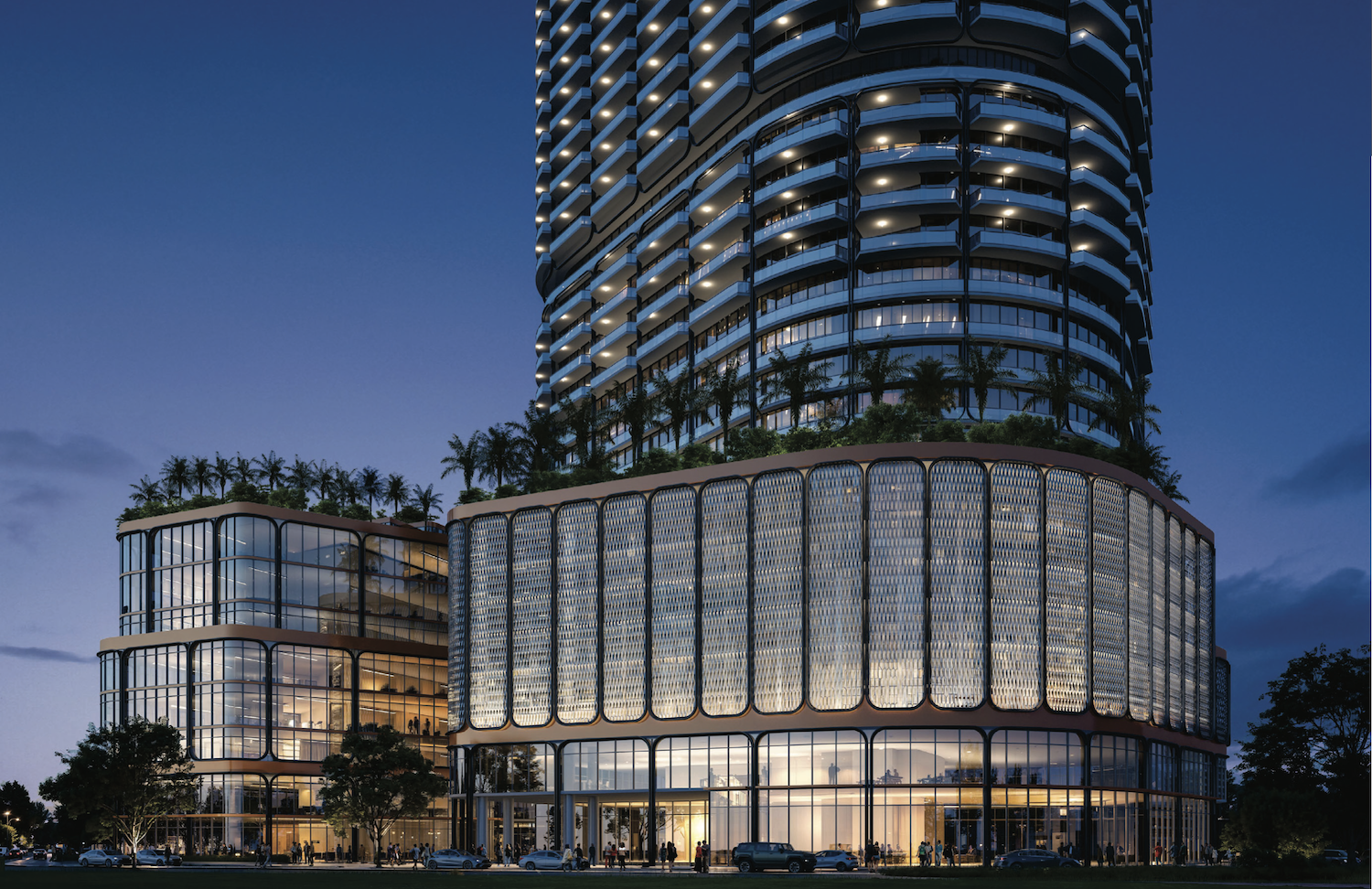
At the base, the project integrates commercial, office, amenity, and parking functions within a coordinated podium condition. Active ground-floor uses are oriented toward the public realm, with transparent frontage intended to engage the sidewalk and reinforce the district’s retail character. Curved building edges and floor-to-ceiling glazing are used along primary frontages to soften corners, enhance visibility into interior spaces, and establish continuity between interior programs and the street.
Credit: Cube 3.
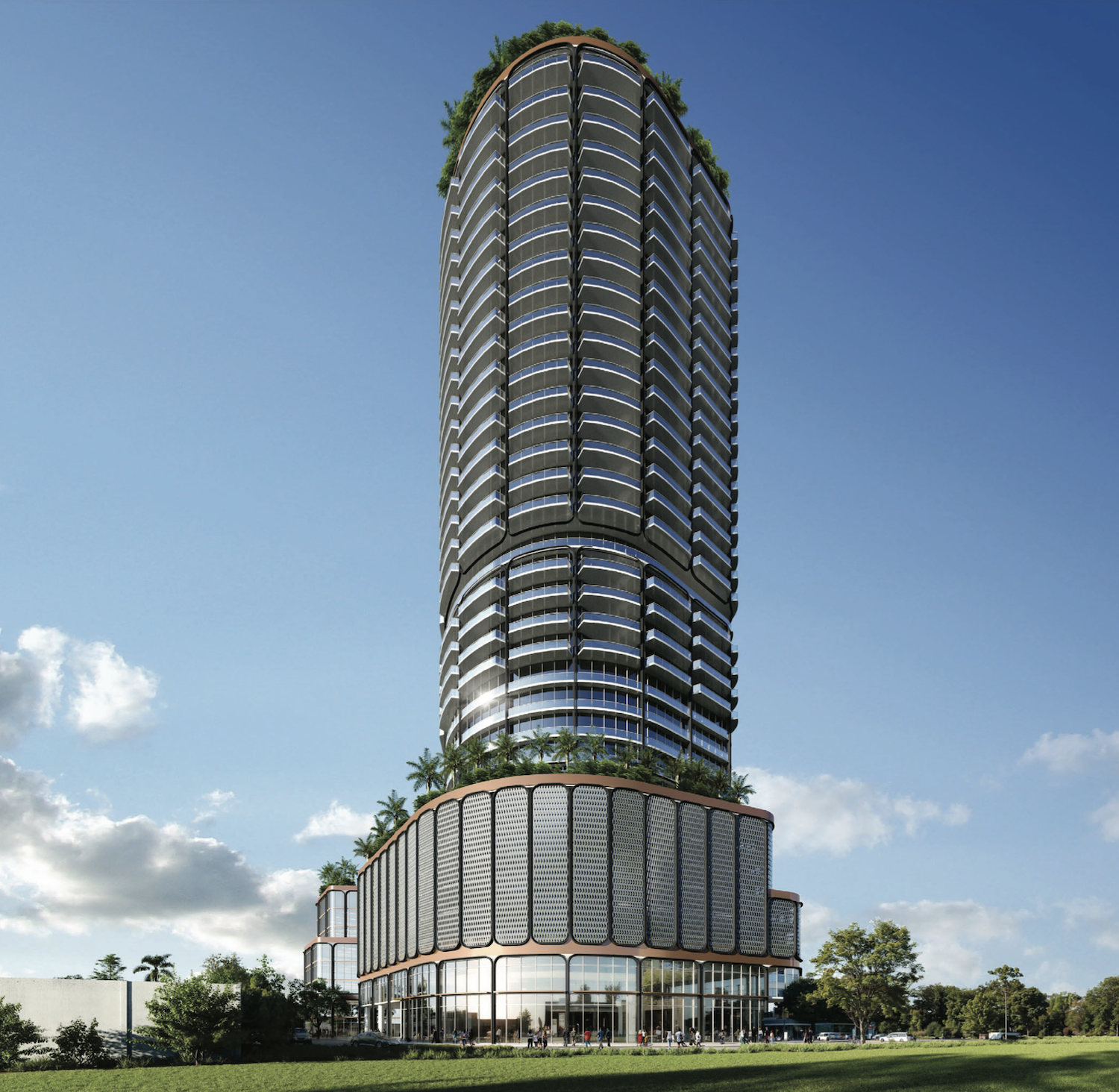
Above the podium, the tower rises as a distinct vertical element within the Design District skyline. The upper floors are articulated through slender vertical elements and curved facade edges that frame the building envelope and emphasize vertical proportion. These facade treatments establish a consistent upward rhythm while balancing structural expression with exterior articulation.
The tower’s geometry is arranged to maximize views from residential, office, and amenity spaces, with the angled massing responding to site conditions and surrounding context. The overall design emphasizes a clear distinction between base and tower, while maintaining continuity through material expression, facade articulation, and integrated outdoor space.
Credit: Cube 3.
The eastern building is planned to rise 36 stories and reach approximately 412 feet to the main roof, for a total height of about 444 feet to the top of the roof. The western building is designed as an eight-story structure rising approximately 125 feet to the main roof, or 139 feet to the top of the roof. The development will be supported by 613 parking spaces, provided through a single underground parking level and structured parking within the eastern building. Vehicular access is proposed from Northeast 4th Avenue.
Credit: Cube 3.
Credit: Cube 3.
Open space and civic space are integrated into the site plan in alignment with the Design District Special Area Plan. The proposal includes 6,235 square feet of open space and an additional 13,687 square feet of designated civic space.
To advance the project as designed, the applicant is requesting approval of a Special Area Plan permit. The requested relief includes permission for the western building to be set back an additional five feet from the base building line along Northeast 2nd Avenue, in lieu of the required zero-foot setback. The adjustment is intended to allow for a wider sidewalk condition along the corridor.
Miami’s Urban Development Review Board is scheduled to review plans today.
Subscribe to YIMBY’s daily e-mail

Follow YIMBYgram for real-time photo updates
Like YIMBY on Facebook
Follow YIMBY’s Twitter for the latest in YIMBYnews
Will the Nader Sculpture Park then be moved or just scrapped?
Beautiful project.